AlphaFold predicted structure
PPP2R2B · Q00005
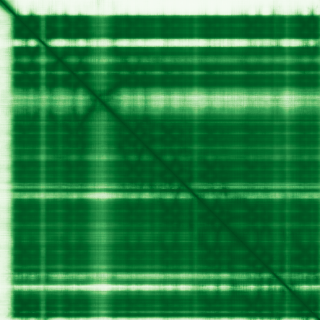
Mean pLDDT
90.5/ 100
Very high
443 residues
Confidence breakdown
- Very high(≥ 90)78%
- Confident(70–90)13%
- Low(50–70)4%
- Very low(< 50)4%
AlphaFold (Jumper et al., 2021) · CC BY 4.0
protein phosphatase 2 regulatory subunit Bbeta
Annotations refreshed 1 month ago.
Diagnostic Grade (Green)
Early onset or syndromic epilepsy
MONOALLELIC, autosomal or pseudoautosomal, NOT imprintedIntellectual disability
MONOALLELIC, autosomal or pseudoautosomal, NOT imprintedAdult onset dystonia, chorea or related movement disorder
OtherAdult onset neurodegenerative disorder
OtherAtaxia and cerebellar anomalies - narrow panel
OtherChildhood onset dystonia, chorea or related movement disorder
OtherDDG2P
MONOALLELIC, autosomal or pseudoautosomal, imprinted status unknownHereditary ataxia
Other+1 more panels — install the extension to see the full list inline on any page.
neurodegenerative disease
spinocerebellar ataxia type 12
schizophrenia
rheumatic disorder
placental abruption
sialadenitis
premature birth
jaw disease
digestive system neoplasm
dermatophytosis
Score is the Open Targets composite evidence score (0-1). Higher = stronger gene-disease association.
Serine/threonine-protein phosphatase 2A 55 kDa regulatory subunit B beta isoform
The B regulatory subunit might modulate substrate selectivity and catalytic activity, and might also direct the localization of the catalytic enzyme to a particular subcellular compartment. Within the PP2A holoenzyme complex, isoform 2 is required to promote proapoptotic activity (By similarity). Isoform 2 regulates neuronal survival through the mitochondrial fission and fusion balance (By similarity)
PPP2R2B · Q00005

Mean pLDDT
90.5/ 100
Very high
443 residues
Confidence breakdown
AlphaFold (Jumper et al., 2021) · CC BY 4.0