
AlphaFold predicted structure
PRDX3 · P30048
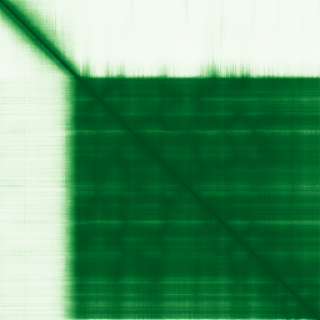
Mean pLDDT
84.8/ 100
Confident
256 residues
Confidence breakdown
- Very high(≥ 90)75%
- Confident(70–90)2%
- Low(50–70)4%
- Very low(< 50)20%
Open interactive 3D viewer
AlphaFold (Jumper et al., 2021) · CC BY 4.0
peroxiredoxin 3
Annotations refreshed 2 months ago.
Diagnostic Grade (Green)
Ataxia and cerebellar anomalies - narrow panel
BIALLELIC, autosomal or pseudoautosomalDDG2P
BIALLELIC, autosomal or pseudoautosomalHereditary ataxia with onset in adulthood
BIALLELIC, autosomal or pseudoautosomalCorneal dystrophy
MONOALLELIC, autosomal or pseudoautosomal, imprinted status unknownspinocerebellar ataxia, autosomal recessive 32
corneal dystrophy, punctiform and polychromatic pre-descemet
autosomal recessive cerebellar ataxia
neurodegenerative disease
hereditary disease
cerebellar ataxia
aceruloplasminemia
Hepatic fibrosis
breast cancer
ovarian carcinoma
Score is the Open Targets composite evidence score (0-1). Higher = stronger gene-disease association.
Thioredoxin-dependent peroxide reductase, mitochondrial
Thiol-specific peroxidase that catalyzes the reduction of hydrogen peroxide and organic hydroperoxides to water and alcohols, respectively. Plays a role in cell protection against oxidative stress by detoxifying peroxides (PubMed:17707404, PubMed:29438714, PubMed:33889951, PubMed:7733872). Acts synergistically with MAP3K13 to regulate the activation of NF-kappa-B in the cytosol (PubMed:12492477). Required for the maintenance of physical strength (By similarity)
PRDX3 · P30048
Mean pLDDT
84.8/ 100
Confident
256 residues
Confidence breakdown
AlphaFold (Jumper et al., 2021) · CC BY 4.0