
AlphaFold predicted structure
PRICKLE1 · Q96MT3
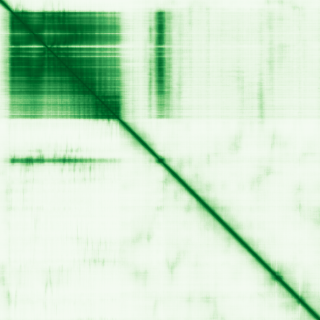
Mean pLDDT
55.7/ 100
Low
831 residues
Confidence breakdown
- Very high(≥ 90)28%
- Confident(70–90)6%
- Low(50–70)5%
- Very low(< 50)61%
Open interactive 3D viewer
AlphaFold (Jumper et al., 2021) · CC BY 4.0
prickle planar cell polarity protein 1
Annotations refreshed 3 months ago.
Moderate Evidence (Amber)
Early onset or syndromic epilepsy
BOTH monoallelic and biallelic, autosomal or pseudoautosomalAdult onset neurodegenerative disorder
BIALLELIC, autosomal or pseudoautosomalAtaxia and cerebellar anomalies - narrow panel
BIALLELIC, autosomal or pseudoautosomalHereditary ataxia
BIALLELIC, autosomal or pseudoautosomalHereditary ataxia with onset in adulthood
BIALLELIC, autosomal or pseudoautosomalIntellectual disability
BOTH monoallelic and biallelic, autosomal or pseudoautosomalUnverricht-Lundborg disease
Abnormality of the skeletal system
self-limited epilepsy with centrotemporal spikes
Rolandic epilepsy
obesity disorder
Unverricht-Lundborg syndrome
alcohol drinking
colorectal cancer
type 2 diabetes mellitus
gout
Score is the Open Targets composite evidence score (0-1). Higher = stronger gene-disease association.
Prickle-like protein 1
Involved in the planar cell polarity pathway that controls convergent extension during gastrulation and neural tube closure. Convergent extension is a complex morphogenetic process during which cells elongate, move mediolaterally, and intercalate between neighboring cells, leading to convergence toward the mediolateral axis and extension along the anteroposterior axis. Necessary for nuclear localization of REST. May serve as nuclear receptor
PRICKLE1 · Q96MT3
Mean pLDDT
55.7/ 100
Low
831 residues
Confidence breakdown
AlphaFold (Jumper et al., 2021) · CC BY 4.0