
AlphaFold predicted structure
PRIM1 · P49642
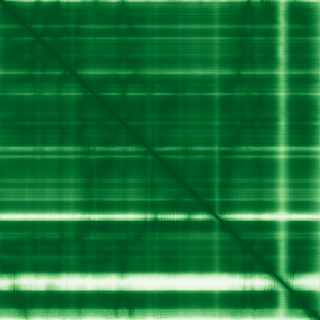
Mean pLDDT
92.7/ 100
Very high
420 residues
Confidence breakdown
- Very high(≥ 90)84%
- Confident(70–90)10%
- Low(50–70)5%
- Very low(< 50)2%
Open interactive 3D viewer
AlphaFold (Jumper et al., 2021) · CC BY 4.0
DNA primase subunit 1
Annotations refreshed 3 months ago.
Diagnostic Grade (Green)
DDG2P
BIALLELIC, autosomal or pseudoautosomalFetal anomalies
BIALLELIC, autosomal or pseudoautosomalPrimary immunodeficiency or monogenic inflammatory bowel disease
BIALLELIC, autosomal or pseudoautosomalSevere microcephaly
BIALLELIC, autosomal or pseudoautosomalprimordial dwarfism-immunodeficiency-lipodystrophy syndrome
microcephalic primordial dwarfism
breast cancer
acute lymphoblastic leukemia
non-small cell lung carcinoma
acute myeloid leukemia
B-cell chronic lymphocytic leukemia
exocrine pancreatic carcinoma
ovarian carcinoma
neoplasm
Score is the Open Targets composite evidence score (0-1). Higher = stronger gene-disease association.
DNA primase small subunit
Catalytic subunit of the DNA primase complex and component of the DNA polymerase alpha complex (also known as the alpha DNA polymerase-primase complex - primosome/replisome) which play an essential role in the initiation of DNA synthesis (PubMed:17893144, PubMed:24043831, PubMed:25550159, PubMed:26975377, PubMed:31479243, PubMed:33060134, PubMed:9268648, PubMed:9705292). During the S phase of the cell cycle, the DNA polymerase alpha complex (composed of a catalytic subunit POLA1, an accessory subunit POLA2 and two primase subunits, the catalytic subunit PRIM1 and the regulatory subunit PRIM2) is recruited to DNA at the replicative forks via direct interactions with MCM10 and WDHD1 (By similarity). The primase subunit of the polymerase alpha complex initiates DNA synthesis by oligomerising short RNA primers on both leading and lagging strands (PubMed:17893144). These primers are initially extended by the polymerase alpha catalytic subunit and subsequently transferred to polymerase delta and polymerase epsilon for processive synthesis on the lagging and leading strand, respectively (By similarity). In the primase complex, both subunits are necessary for the initial di-nucleotide formation, but the extension of the primer depends only on the catalytic subunit (PubMed:17893144). Synthesizes 9-mer RNA primers (also known as the 'unit length' RNA primers). Incorporates only ribonucleotides in the presence of ribo- and deoxy-nucleotide triphosphates (rNTPs, dNTPs) (PubMed:26975377). Requires template thymine or cytidine to start the RNA primer synthesis, with an adenine or guanine at its 5'-end (PubMed:25550159, PubMed:26975377). Binds single stranded DNA (By similarity)
Curated MONDO disease pages that list PRIM1 among their top associated genes.
PRIM1 · P49642
Mean pLDDT
92.7/ 100
Very high
420 residues
Confidence breakdown
AlphaFold (Jumper et al., 2021) · CC BY 4.0