Skip to content
GenoLensGenoLens

PRKG2

Chr 4q21.21

protein kinase cGMP-dependent 2

Aliases:
cGKII, PRKGR2, PKG2
MANE:
ENST00000264399.6

Annotations refreshed 9 hours ago.

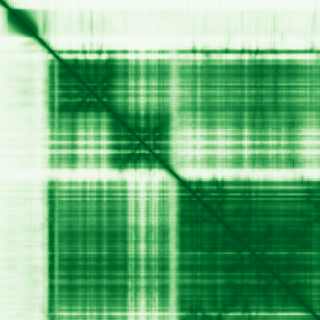
Predicted protein structure

Clinical relevance (Genomics England PanelApp)

Diagnostic Grade (Green)

  • DDG2P

    BIALLELIC, autosomal or pseudoautosomal
  • Skeletal dysplasia

    BIALLELIC, autosomal or pseudoautosomal
  • Fetal anomalies

    BIALLELIC, autosomal or pseudoautosomal

Disease associations (Open Targets)

  • acromesomelic dysplasia

    0.67
  • spondylometaphyseal dysplasia, pagnamenta type

    0.55
  • Abnormality of the skeletal system

    0.48
  • atrial fibrillation

    0.41
  • dengue disease

    0.37
  • osteoarthritis, hip

    0.37
  • alcohol drinking

    0.33
  • smoking behavior

    0.31
  • adolescent idiopathic scoliosis

    0.29
  • insomnia

    0.29

Score is the Open Targets composite evidence score (0-1). Higher = stronger gene-disease association.

Protein function (UniProt)

cGMP-dependent protein kinase 2

Crucial regulator of intestinal secretion and bone growth. Phosphorylates and activates CFTR on the plasma membrane. Plays a key role in intestinal secretion by regulating cGMP-dependent translocation of CFTR in jejunum (PubMed:33106379). Acts downstream of NMDAR to activate the plasma membrane accumulation of GRIA1/GLUR1 in synapse and increase synaptic plasticity. Phosphorylates GRIA1/GLUR1 at Ser-863 (By similarity). Acts as a regulator of gene expression and activator of the extracellular signal-regulated kinases MAPK3/ERK1 and MAPK1/ERK2 in mechanically stimulated osteoblasts. Under fluid shear stress, mediates ERK activation and subsequent induction of FOS, FOSL1/FRA1, FOSL2/FRA2 and FOSB that play a key role in the osteoblast anabolic response to mechanical stimulation (By similarity)

Data sources: HGNC (CC BY 4.0), AlphaFold (CC BY 4.0, Jumper et al. Nature 2021), Genomics England PanelApp (CC BY 4.0), ClinGen, Open Targets (CC0), UniProt.

Not for sole clinical decision-making. Always verify against primary sources.