
AlphaFold predicted structure
PRNP · F7VJQ1
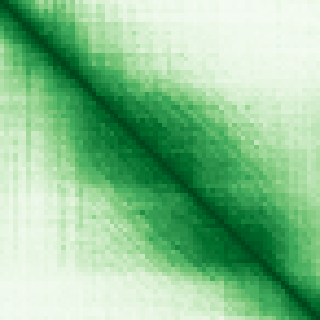
Mean pLDDT
68.1/ 100
Low
73 residues
Confidence breakdown
- Very high(≥ 90)0%
- Confident(70–90)52%
- Low(50–70)47%
- Very low(< 50)1%
Open interactive 3D viewer
AlphaFold (Jumper et al., 2021) · CC BY 4.0
prion protein (Kanno blood group)
Annotations refreshed 2 months ago.
Diagnostic Grade (Green)
Adult onset dystonia, chorea or related movement disorder
MONOALLELIC, autosomal or pseudoautosomal, NOT imprintedAdult onset hereditary spastic paraplegia
MONOALLELIC, autosomal or pseudoautosomal, NOT imprintedAdult onset leukodystrophy
MONOALLELIC, autosomal or pseudoautosomal, imprinted status unknownAdult onset neurodegenerative disorder
MONOALLELIC, autosomal or pseudoautosomal, imprinted status unknownAtaxia and cerebellar anomalies - narrow panel
MONOALLELIC, autosomal or pseudoautosomal, imprinted status unknownEarly onset dementia (encompassing fronto-temporal dementia and prion disease)
MONOALLELIC, autosomal or pseudoautosomal, NOT imprintedHereditary ataxia
MONOALLELIC, autosomal or pseudoautosomal, imprinted status unknownHereditary ataxia with onset in adulthood
MONOALLELIC, autosomal or pseudoautosomal, imprinted status unknown+7 more panels — install the extension to see the full list inline on any page.
Gerstmann-Straussler-Scheinker syndrome
Creutzfeldt Jacob disease
Huntington disease-like 1
fatal familial insomnia
inherited Creutzfeldt-Jakob disease
dementia
neurodegenerative disease
hereditary disease
prion disease
cerebral amyloid angiopathy
Score is the Open Targets composite evidence score (0-1). Higher = stronger gene-disease association.
Major prion protein
Its primary physiological function is unclear. May play a role in neuronal development and synaptic plasticity. May be required for neuronal myelin sheath maintenance. May promote myelin homeostasis through acting as an agonist for ADGRG6 receptor. May play a role in iron uptake and iron homeostasis. Soluble oligomers are toxic to cultured neuroblastoma cells and induce apoptosis (in vitro) (By similarity). Association with GPC1 (via its heparan sulfate chains) targets PRNP to lipid rafts. Also provides Cu(2+) or Zn(2+) for the ascorbate-mediated GPC1 deaminase degradation of its heparan sulfate side chains (By similarity)
PRNP · F7VJQ1
Mean pLDDT
68.1/ 100
Low
73 residues
Confidence breakdown
AlphaFold (Jumper et al., 2021) · CC BY 4.0