Skip to content
GenoLensGenoLens

PROKR2

Chr 20p12.3

prokineticin receptor 2

Aliases:
GPR73b, PKR2, GPRg2, dJ680N4.3
MANE:
ENST00000678254.1

Annotations refreshed 10 hours ago.

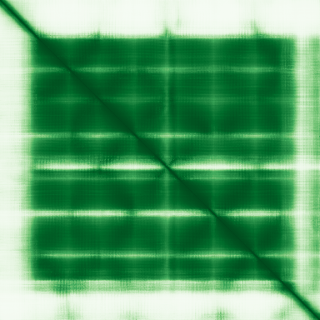
Predicted protein structure

Clinical relevance (Genomics England PanelApp)

Diagnostic Grade (Green)

  • Hypogonadotropic hypogonadism

    BIALLELIC, autosomal or pseudoautosomal
  • Hypogonadotropic hypogonadism (GMS)

    BIALLELIC, autosomal or pseudoautosomal
  • IUGR and IGF abnormalities

    BOTH monoallelic and biallelic, autosomal or pseudoautosomal
  • Paediatric pseudo-obstruction syndrome

    MONOALLELIC, autosomal or pseudoautosomal, imprinted status unknown
  • Pituitary hormone deficiency

    MONOALLELIC, autosomal or pseudoautosomal, imprinted status unknown
  • Fetal anomalies

    MONOALLELIC, autosomal or pseudoautosomal, imprinted status unknown
  • Monogenic short stature

    BOTH monoallelic and biallelic, autosomal or pseudoautosomal

Disease associations (Open Targets)

  • hypogonadotropic hypogonadism 3 with or without anosmia

    0.82
  • Kallmann syndrome

    0.71
  • hypogonadotropic hypogonadism

    0.66
  • male infertility with azoospermia or oligozoospermia due to single gene mutation

    0.44
  • Septo-optic dysplasia

    0.37
  • Hirschsprung disease

    0.37
  • hypogonadotropic hypogonadism 2 with or without anosmia

    0.34
  • hereditary disease

    0.34
  • Abnormality of the skeletal system

    0.28
  • Male infertility with spermatogenesis disorder

    0.27

Score is the Open Targets composite evidence score (0-1). Higher = stronger gene-disease association.

Protein function (UniProt)

Prokineticin receptor 2

Receptor for prokineticin 2. Exclusively coupled to the G(q) subclass of heteromeric G proteins. Activation leads to mobilization of calcium, stimulation of phosphoinositide turnover and activation of p44/p42 mitogen-activated protein kinase

Data sources: HGNC (CC BY 4.0), AlphaFold (CC BY 4.0, Jumper et al. Nature 2021), Genomics England PanelApp (CC BY 4.0), ClinGen, Open Targets (CC0), UniProt.

Not for sole clinical decision-making. Always verify against primary sources.