AlphaFold predicted structure
PSMB10 · P40306
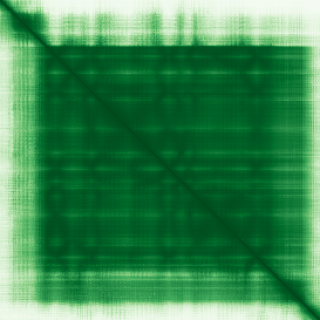
Mean pLDDT
90.9/ 100
Very high
273 residues
Confidence breakdown
- Very high(≥ 90)76%
- Confident(70–90)18%
- Low(50–70)4%
- Very low(< 50)2%
AlphaFold (Jumper et al., 2021) · CC BY 4.0
proteasome 20S subunit beta 10
Annotations refreshed 10 hours ago.
Diagnostic Grade (Green)
Primary immunodeficiency or monogenic inflammatory bowel disease
BIALLELIC, autosomal or pseudoautosomalAutoinflammatory disorders
BOTH monoallelic and biallelic, autosomal or pseudoautosomalCOVID-19 research
BIALLELIC, autosomal or pseudoautosomalIntestinal failure or congenital diarrhoea
MONOALLELIC, autosomal or pseudoautosomal, NOT imprintedRare genetic inflammatory skin disorders
BOTH monoallelic and biallelic, autosomal or pseudoautosomalEctodermal dysplasia
MONOALLELIC, autosomal or pseudoautosomal, NOT imprintedproteasome-associated autoinflammatory syndrome 5
plasma cell myeloma
immunodeficiency 121 with autoinflammation
mantle cell lymphoma
neoplasm
amyloidosis
Omenn syndrome
AL amyloidosis
acute lymphoblastic leukemia
non-Hodgkin lymphoma
Score is the Open Targets composite evidence score (0-1). Higher = stronger gene-disease association.
Proteasome subunit beta type-10
The proteasome is a multicatalytic proteinase complex which is characterized by its ability to cleave peptides with Arg, Phe, Tyr, Leu, and Glu adjacent to the leaving group at neutral or slightly basic pH. The proteasome has an ATP-dependent proteolytic activity. This subunit is involved in antigen processing to generate class I binding peptides
PSMB10 · P40306

Mean pLDDT
90.9/ 100
Very high
273 residues
Confidence breakdown
AlphaFold (Jumper et al., 2021) · CC BY 4.0