
AlphaFold predicted structure
PSMD12 · O00232
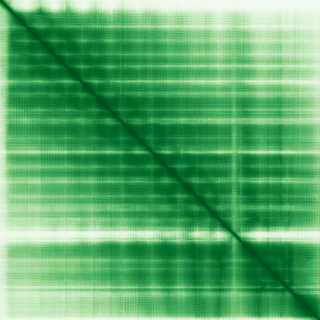
Mean pLDDT
78.9/ 100
Confident
456 residues
Confidence breakdown
- Very high(≥ 90)6%
- Confident(70–90)84%
- Low(50–70)5%
- Very low(< 50)5%
Open interactive 3D viewer
AlphaFold (Jumper et al., 2021) · CC BY 4.0
proteasome 26S subunit, non-ATPase 12
Annotations refreshed 2 months ago.
Diagnostic Grade (Green)
Intellectual disability
MONOALLELIC, autosomal or pseudoautosomal, imprinted status unknownDDG2P
MONOALLELIC, autosomal or pseudoautosomal, imprinted status unknownRare syndromic craniosynostosis or isolated multisuture synostosis
MONOALLELIC, autosomal or pseudoautosomal, imprinted status unknownStankiewicz-Isidor syndrome
plasma cell myeloma
mantle cell lymphoma
hereditary disease
neoplasm
amyloidosis
HIV infectious disease
neurodegenerative disease
AL amyloidosis
complex neurodevelopmental disorder
Score is the Open Targets composite evidence score (0-1). Higher = stronger gene-disease association.
26S proteasome non-ATPase regulatory subunit 12
Component of the 26S proteasome, a multiprotein complex involved in the ATP-dependent degradation of ubiquitinated proteins. This complex plays a key role in the maintenance of protein homeostasis by removing misfolded or damaged proteins, which could impair cellular functions, and by removing proteins whose functions are no longer required. Therefore, the proteasome participates in numerous cellular processes, including cell cycle progression, apoptosis, or DNA damage repair
PSMD12 · O00232
Mean pLDDT
78.9/ 100
Confident
456 residues
Confidence breakdown
AlphaFold (Jumper et al., 2021) · CC BY 4.0