
AlphaFold predicted structure
PTPN23 · Q9H3S7
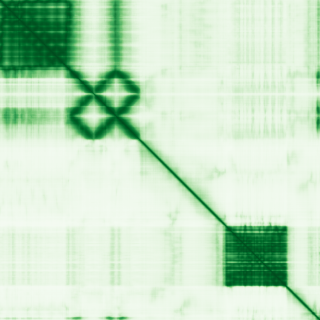
Mean pLDDT
69.6/ 100
Low
1,636 residues
Confidence breakdown
- Very high(≥ 90)41%
- Confident(70–90)19%
- Low(50–70)3%
- Very low(< 50)37%
Open interactive 3D viewer
AlphaFold (Jumper et al., 2021) · CC BY 4.0
protein tyrosine phosphatase non-receptor type 23
Annotations refreshed 3 months ago.
Diagnostic Grade (Green)
Early onset or syndromic epilepsy
BIALLELIC, autosomal or pseudoautosomalFetal anomalies
BIALLELIC, autosomal or pseudoautosomalIntellectual disability
BIALLELIC, autosomal or pseudoautosomalSevere microcephaly
BIALLELIC, autosomal or pseudoautosomalneurodevelopmental disorder and structural brain anomalies with or without seizures and spasticity
neurodegenerative disease
Brain atrophy
Global developmental delay
Intellectual disability
complex neurodevelopmental disorder
hereditary spastic paraplegia
Seizure
liver disorder
hereditary disease
Score is the Open Targets composite evidence score (0-1). Higher = stronger gene-disease association.
Tyrosine-protein phosphatase non-receptor type 23
Plays a role in sorting of endocytic ubiquitinated cargos into multivesicular bodies (MVBs) via its interaction with the ESCRT-I complex (endosomal sorting complex required for transport I), and possibly also other ESCRT complexes (PubMed:18434552, PubMed:21757351). May act as a negative regulator of Ras-mediated mitogenic activity (PubMed:18434552). Plays a role in ciliogenesis (PubMed:20393563)
PTPN23 · Q9H3S7
Mean pLDDT
69.6/ 100
Low
1,636 residues
Confidence breakdown
AlphaFold (Jumper et al., 2021) · CC BY 4.0