AlphaFold predicted structure
PTPRQ · Q9UMZ3
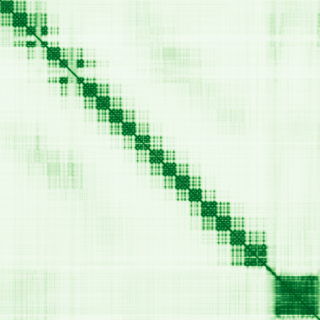
Mean pLDDT
74.9/ 100
Confident
2,332 residues
Confidence breakdown
- Very high(≥ 90)5%
- Confident(70–90)73%
- Low(50–70)13%
- Very low(< 50)10%
AlphaFold (Jumper et al., 2021) · CC BY 4.0
protein tyrosine phosphatase receptor type Q
Annotations refreshed 1 month ago.
Diagnostic Grade (Green)
Monogenic hearing loss
BOTH monoallelic and biallelic, autosomal or pseudoautosomalOsteogenesis imperfecta
Skeletal dysplasia
hearing loss, autosomal recessive
autosomal dominant nonsyndromic hearing loss
deafness
Hearing impairment
Abnormality of the ear
Sensorineural hearing impairment
flatfoot
Loss of ambulation
Unsteady gait
Pes cavus
Score is the Open Targets composite evidence score (0-1). Higher = stronger gene-disease association.
Phosphatidylinositol phosphatase PTPRQ
Dephosphorylates phosphatidylinositol phosphates, such as phosphatidylinositol 3,4,5-trisphosphate (PIP3) and phosphatidylinositol 3,5-diphosphates, with preference for PIP3 (PubMed:23897475). Phosphate can be hydrolyzed from the D3 and D5 positions in the inositol ring (PubMed:23897475). Has low tyrosine-protein phosphatase activity in vitro; however, the relevance of such activity in vivo is unclear (By similarity). Plays an important role in adipogenesis of mesenchymal stem cells (MSCs). Regulates the phosphorylation state of AKT1 by regulating the levels of PIP3 in MSCs and preadipocyte cells (PubMed:19351528). Required for hair bundle maturation, a process that enables hair cells to detect and transmit sound and balance signals effectively, therefore affecting auditory function (PubMed:20472657, PubMed:29309402). May act by regulating the level of phosphatidylinositol 4,5-bisphosphate (PIP2) level in the basal region of hair bundles (By similarity)
Curated MONDO disease pages that list PTPRQ among their top associated genes.
PTPRQ · Q9UMZ3

Mean pLDDT
74.9/ 100
Confident
2,332 residues
Confidence breakdown
AlphaFold (Jumper et al., 2021) · CC BY 4.0