
AlphaFold predicted structure
PUF60 · Q9UHX1
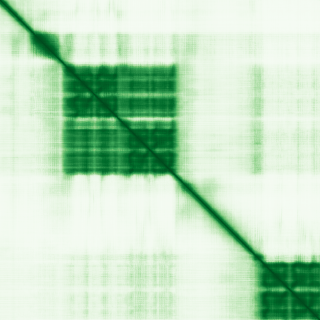
Mean pLDDT
67.9/ 100
Low
559 residues
Confidence breakdown
- Very high(≥ 90)23%
- Confident(70–90)34%
- Low(50–70)9%
- Very low(< 50)34%
Open interactive 3D viewer
AlphaFold (Jumper et al., 2021) · CC BY 4.0
poly(U) binding splicing factor 60
Annotations refreshed 2 months ago.
Diagnostic Grade (Green)
DDG2P
MONOALLELIC, autosomal or pseudoautosomal, imprinted status unknownFetal anomalies
MONOALLELIC, autosomal or pseudoautosomal, imprinted status unknownIntellectual disability
MONOALLELIC, autosomal or pseudoautosomal, imprinted status unknownOcular coloboma
MONOALLELIC, autosomal or pseudoautosomal, NOT imprintedSevere microcephaly
MONOALLELIC, autosomal or pseudoautosomal, NOT imprintedSkeletal dysplasia
MONOALLELIC, autosomal or pseudoautosomal, NOT imprintedStructural eye disease
MONOALLELIC, autosomal or pseudoautosomal, NOT imprintedVACTERL-like phenotypes
MONOALLELIC, autosomal or pseudoautosomal, NOT imprinted+3 more panels — install the extension to see the full list inline on any page.
8q24.3 microdeletion syndrome
intellectual disability-cardiac anomalies-short stature-joint laxity syndrome
neurodegenerative disease
hereditary disease
Intellectual disability
syndromic intellectual disability
dengue disease
neurodevelopmental disorder with hypotonia and variable intellectual and behavioral abnormalities
CHARGE syndrome
Neurodevelopmental abnormality
Score is the Open Targets composite evidence score (0-1). Higher = stronger gene-disease association.
Poly(U)-binding-splicing factor PUF60
DNA- and RNA-binding protein, involved in several nuclear processes such as pre-mRNA splicing, apoptosis and transcription regulation. In association with FUBP1 regulates MYC transcription at the P2 promoter through the core-TFIIH basal transcription factor. Acts as a transcriptional repressor through the core-TFIIH basal transcription factor. Represses FUBP1-induced transcriptional activation but not basal transcription. Decreases ERCC3 helicase activity. Does not repress TFIIH-mediated transcription in xeroderma pigmentosum complementation group B (XPB) cells. Is also involved in pre-mRNA splicing. Promotes splicing of an intron with weak 3'-splice site and pyrimidine tract in a cooperative manner with U2AF2. Involved in apoptosis induction when overexpressed in HeLa cells. Isoform 6 failed to repress MYC transcription and inhibited FIR-induced apoptosis in colorectal cancer. Isoform 6 may contribute to tumor progression by enabling increased MYC expression and greater resistance to apoptosis in tumors than in normal cells. Modulates alternative splicing of several mRNAs. Binds to relaxed DNA of active promoter regions. Binds to the pyrimidine tract and 3'-splice site regions of pre-mRNA; binding is enhanced in presence of U2AF2. Binds to Y5 RNA in association with RO60. Binds to poly(U) RNA
PUF60 · Q9UHX1
Mean pLDDT
67.9/ 100
Low
559 residues
Confidence breakdown
AlphaFold (Jumper et al., 2021) · CC BY 4.0