AlphaFold predicted structure
PURA · Q00577
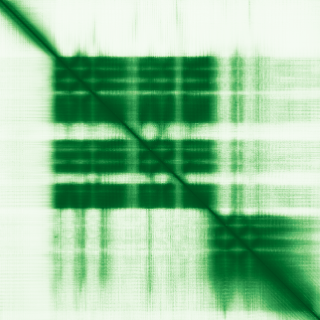
Mean pLDDT
78.2/ 100
Confident
322 residues
Confidence breakdown
- Very high(≥ 90)48%
- Confident(70–90)21%
- Low(50–70)13%
- Very low(< 50)17%
AlphaFold (Jumper et al., 2021) · CC BY 4.0
purine rich element binding protein A
Annotations refreshed 9 hours ago.
Diagnostic Grade (Green)
DDG2P
MONOALLELIC, autosomal or pseudoautosomal, imprinted status unknownEarly onset or syndromic epilepsy
MONOALLELIC, autosomal or pseudoautosomal, NOT imprintedIntellectual disability
MONOALLELIC, autosomal or pseudoautosomal, NOT imprintedFetal anomalies
MONOALLELIC, autosomal or pseudoautosomal, NOT imprintedPURA-related severe neonatal hypotonia-seizures-encephalopathy syndrome due to a point mutation
Intellectual disability
PURA-related severe neonatal hypotonia-seizures-encephalopathy syndrome
hereditary disease
neurodegenerative disease
Global developmental delay
Delayed speech and language development
Neonatal hypotonia
Seizure
autosomal dominant non-syndromic intellectual disability
Score is the Open Targets composite evidence score (0-1). Higher = stronger gene-disease association.
Transcriptional activator protein Pur-alpha
This is a probable transcription activator that specifically binds the purine-rich single strand of the PUR element located upstream of the MYC gene (PubMed:1448097, PubMed:20976240). May play a role in the initiation of DNA replication and in recombination
PURA · Q00577

Mean pLDDT
78.2/ 100
Confident
322 residues
Confidence breakdown
AlphaFold (Jumper et al., 2021) · CC BY 4.0