
AlphaFold predicted structure
PVR · P15151
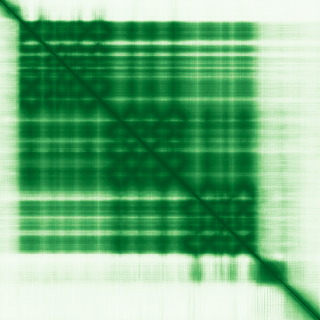
Mean pLDDT
84.9/ 100
Confident
417 residues
Confidence breakdown
- Very high(≥ 90)66%
- Confident(70–90)14%
- Low(50–70)8%
- Very low(< 50)12%
Open interactive 3D viewer
AlphaFold (Jumper et al., 2021) · CC BY 4.0
PVR cell adhesion molecule
Annotations refreshed 2 months ago.
Moderate Evidence (Amber)
COVID-19 research
UnknownAlzheimer disease
multiple sclerosis
neurodegenerative disease
liver disorder
polyarteritis nodosa
deep vein thrombosis
neoplasm
hepatocellular carcinoma
cancer
Miyoshi myopathy
Score is the Open Targets composite evidence score (0-1). Higher = stronger gene-disease association.
Poliovirus receptor
Mediates NK cell adhesion and triggers NK cell effector functions. Binds two different NK cell receptors: CD96 and CD226. These interactions accumulates at the cell-cell contact site, leading to the formation of a mature immunological synapse between NK cell and target cell. This may trigger adhesion and secretion of lytic granules and IFN-gamma and activate cytotoxicity of activated NK cells. May also promote NK cell-target cell modular exchange, and PVR transfer to the NK cell. This transfer is more important in some tumor cells expressing a lot of PVR, and may trigger fratricide NK cell activation, providing tumors with a mechanism of immunoevasion. Plays a role in mediating tumor cell invasion and migration
Curated MONDO disease pages that list PVR among their top associated genes.
PVR · P15151
Mean pLDDT
84.9/ 100
Confident
417 residues
Confidence breakdown
AlphaFold (Jumper et al., 2021) · CC BY 4.0