Skip to content
GenoLensGenoLens

PYROXD1

Chr 12p12.1

pyridine nucleotide-disulphide oxidoreductase domain 1

Aliases:
DKFZp762G094, FLJ22028
MANE:
ENST00000240651.14

Annotations refreshed 1 month ago.

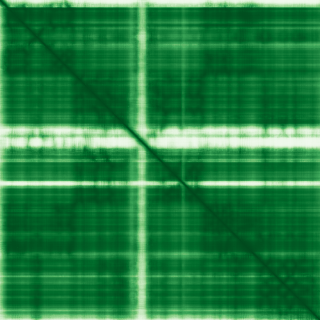
Predicted protein structure

Clinical relevance (Genomics England PanelApp)

Diagnostic Grade (Green)

  • Congenital muscular dystrophy

    BIALLELIC, autosomal or pseudoautosomal
  • Congenital myopathy

    BIALLELIC, autosomal or pseudoautosomal
  • DDG2P

    BIALLELIC, autosomal or pseudoautosomal
  • Limb girdle muscular dystrophies, myofibrillar myopathies and distal myopathies

    BIALLELIC, autosomal or pseudoautosomal
  • Fetal anomalies

    BIALLELIC, autosomal or pseudoautosomal

Disease associations (Open Targets)

  • myofibrillar myopathy 8

    0.75
  • Muscle filaminopathy

    0.55
  • muscular dystrophy

    0.37
  • hereditary neoplastic syndrome

    0.19
  • Inherited cancer-predisposing syndrome

    0.19
  • hereditary disease

    0.19
  • RECON progeroid syndrome

    0.18
  • neurodegenerative disease

    0.17
  • Hereditary breast and ovarian cancer syndrome

    0.12
  • hereditary breast ovarian cancer syndrome

    0.12

Score is the Open Targets composite evidence score (0-1). Higher = stronger gene-disease association.

Protein function (UniProt)

tRNA ligase complex-associated NAD(P)H dehydrogenase PYROXD1

Flavoprotein whose role is to protect RTCB, the catalytic subunit of the tRNA ligase complex (tRNA-LC) involved in tRNA splicing and unfolded protein response, from oxidative inactivation (PubMed:33930333). It directly binds and shields the catalytic center of RTCB, prior to guanylylation, when it is inactive and its active site is vulnerable to oxidation under aerobic conditions. The interaction of PYROXD1 with RTCB is allosterically regulated by NAD(P)H binding and reduction of its FAD cofactor, while reoxidation of PYROXD1 thanks to its NADPH dehydrogenase activity triggers the timed release of RTCB, enabling its subsequent activation. Thereby, this protective mechanism may also function as a molecular timer, regulating RTCB activation through controlled release (PubMed:40069351)

Data sources: HGNC (CC BY 4.0), AlphaFold (CC BY 4.0, Jumper et al. Nature 2021), Genomics England PanelApp (CC BY 4.0), ClinGen, Open Targets (CC0), UniProt.

Not for sole clinical decision-making. Always verify against primary sources.