
AlphaFold predicted structure
RAB34 · P0DI83
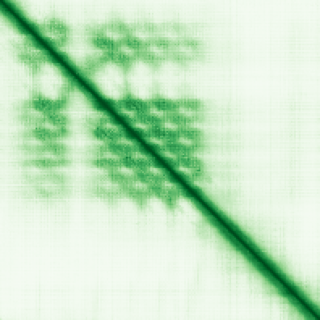
Mean pLDDT
46.8/ 100
Very low
198 residues
Confidence breakdown
- Very high(≥ 90)0%
- Confident(70–90)0%
- Low(50–70)42%
- Very low(< 50)58%
Open interactive 3D viewer
AlphaFold (Jumper et al., 2021) · CC BY 4.0
RAB34, member RAS oncogene family
Annotations refreshed 2 months ago.
Diagnostic Grade (Green)
DDG2P
BIALLELIC, autosomal or pseudoautosomalFetal anomalies
BIALLELIC, autosomal or pseudoautosomalorofaciodigital syndrome 20
Jeune syndrome
orofaciodigital syndrome I
orofaciodigital syndrome
neurodegenerative disease
central nervous system cancer
glioma
non-small cell lung carcinoma
hereditary angioedema
neoplasm
Score is the Open Targets composite evidence score (0-1). Higher = stronger gene-disease association.
Ras-related protein Rab-34
The small GTPases Rab are key regulators of intracellular membrane trafficking, from the formation of transport vesicles to their fusion with membranes. Rabs cycle between an inactive GDP-bound form and an active GTP-bound form that is able to recruit to membranes different sets of downstream effectors directly responsible for vesicle formation, movement, tethering and fusion (By similarity). RAB34 transports protein involved in the redistribution of lysosomes to the peri-Golgi region (PubMed:27113757). Plays a role in the maturation of phagosomes that engulf pathogens, such as S.aureus and M.tuberculosis (PubMed:21255211). Plays a role in the fusion of phagosomes with lysosomes (PubMed:21255211). Involved in ciliogenesis (PubMed:37384395). In particular, it is required for early steps of the intracellular cilium assembly pathway initiated by trafficking and docking of ciliary vesicles to the centrioles in the cytoplasm, followed by axoneme formation in the cytoplasm. After axoneme elongation, the centrioles migrate close to the cell surface so that ciliary vesicles can fuse with the plasma membrane to expose cilia to the extracellular space (By similarity). It seems dispensable for ciliogenesis via the extracellular pathway where cilium assembly begins after migration and docking of the centriole to the plasma membrane (By similarity). Also acts as a positive regulator of hedgehog signaling and regulates ciliary function (By similarity)
RAB34 · P0DI83
Mean pLDDT
46.8/ 100
Very low
198 residues
Confidence breakdown
AlphaFold (Jumper et al., 2021) · CC BY 4.0