
AlphaFold predicted structure
RAC1 · P63000
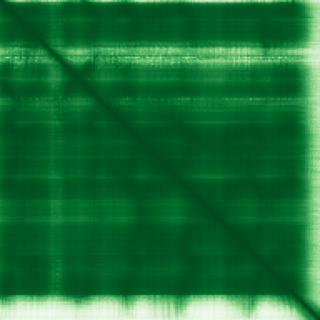
Mean pLDDT
93.8/ 100
Very high
192 residues
Confidence breakdown
- Very high(≥ 90)87%
- Confident(70–90)7%
- Low(50–70)6%
- Very low(< 50)0%
Open interactive 3D viewer
AlphaFold (Jumper et al., 2021) · CC BY 4.0
Rac family small GTPase 1
Annotations refreshed 2 months ago.
Diagnostic Grade (Green)
DDG2P
MONOALLELIC, autosomal or pseudoautosomal, imprinted status unknownFetal anomalies
MONOALLELIC, autosomal or pseudoautosomal, imprinted status unknownIntellectual disability
MONOALLELIC, autosomal or pseudoautosomal, imprinted status unknownintellectual disability, autosomal dominant 48
melanoma
cutaneous melanoma
cutaneous leishmaniasis
head and neck squamous cell carcinoma
Abnormality of the skeletal system
Global developmental delay
hereditary disease
cancer
neurodegenerative disease
Score is the Open Targets composite evidence score (0-1). Higher = stronger gene-disease association.
Ras-related C3 botulinum toxin substrate 1
Plasma membrane-associated small GTPase which cycles between active GTP-bound and inactive GDP-bound states. In its active state, binds to a variety of effector proteins to regulate cellular responses such as secretory processes, phagocytosis of apoptotic cells, epithelial cell polarization, neurons adhesion, migration and differentiation, and growth-factor induced formation of membrane ruffles (PubMed:1643658, PubMed:22843693, PubMed:23512198, PubMed:28886345). Rac1 p21/rho GDI heterodimer is the active component of the cytosolic factor sigma 1, which is involved in stimulation of the NADPH oxidase activity in macrophages. Essential for the SPATA13-mediated regulation of cell migration and adhesion assembly and disassembly. Stimulates PKN2 kinase activity (PubMed:9121475). In concert with RAB7A, plays a role in regulating the formation of RBs (ruffled borders) in osteoclasts (PubMed:1643658). In podocytes, promotes nuclear shuttling of NR3C2; this modulation is required for a proper kidney functioning. Required for atypical chemokine receptor ACKR2-induced LIMK1-PAK1-dependent phosphorylation of cofilin (CFL1) and for up-regulation of ACKR2 from endosomal compartment to cell membrane, increasing its efficiency in chemokine uptake and degradation. In neurons, is involved in dendritic spine formation and synaptic plasticity (By similarity). In hippocampal neurons, involved in spine morphogenesis and synapse formation, through local activation at synapses by guanine nucleotide exchange factors (GEFs), such as ARHGEF6/ARHGEF7/PIX (PubMed:12695502). In synapses, seems to mediate the regulation of F-actin cluster formation performed by SHANK3. In neurons, plays a crucial role in regulating GABA(A) receptor synaptic stability and hence GABAergic inhibitory synaptic transmission through its role in PAK1 activation and eventually F-actin stabilization (By similarity). Required for DSG3 translocation to cell-cell junctions, DSG3-mediated organization of cortical F-actin bundles and anchoring of actin at cell junctions; via interaction with DSG3 (PubMed:22796473). Subunit of the phagocyte NADPH oxidase complex that mediates the transfer of electrons from cytosolic NADPH to O2 to produce the superoxide anion (O2(-)) (PubMed:38355798)
RAC1 · P63000
Mean pLDDT
93.8/ 100
Very high
192 residues
Confidence breakdown
AlphaFold (Jumper et al., 2021) · CC BY 4.0