
AlphaFold predicted structure
RAD51 · Q06609
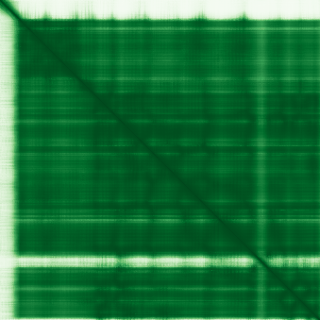
Mean pLDDT
91.4/ 100
Very high
339 residues
Confidence breakdown
- Very high(≥ 90)89%
- Confident(70–90)3%
- Low(50–70)3%
- Very low(< 50)6%
Open interactive 3D viewer
AlphaFold (Jumper et al., 2021) · CC BY 4.0
RAD51 recombinase
Annotations refreshed 2 months ago.
Diagnostic Grade (Green)
Confirmed Fanconi anaemia or Bloom syndrome
MONOALLELIC, autosomal or pseudoautosomal, imprinted status unknownCOVID-19 research
MONOALLELIC, autosomal or pseudoautosomal, imprinted status unknownFetal anomalies
MONOALLELIC, autosomal or pseudoautosomal, NOT imprintedLimb disorders
MONOALLELIC, autosomal or pseudoautosomal, imprinted status unknownSevere microcephaly
MONOALLELIC, autosomal or pseudoautosomal, imprinted status unknownHaematological malignancies cancer susceptibility
MONOALLELIC, autosomal or pseudoautosomal, imprinted status unknownHaematological malignancies for rare disease
MONOALLELIC, autosomal or pseudoautosomal, imprinted status unknownIntellectual disability
MONOALLELIC, autosomal or pseudoautosomal, NOT imprinted+3 more panels — install the extension to see the full list inline on any page.
Fanconi anemia complementation group R
Fanconi anemia
mirror movements 2
cancer
breast cancer
hereditary breast carcinoma
Hereditary breast cancer
hereditary disease
familial congenital mirror movements
alcohol drinking
Score is the Open Targets composite evidence score (0-1). Higher = stronger gene-disease association.
DNA repair protein RAD51 homolog 1
Homologous DNA recombinase that catalyzes strand exchange, a key step in DNA repair through homologous recombination (HR) (PubMed:12205100, PubMed:12442171, PubMed:15937124, PubMed:17515904, PubMed:17515903, PubMed:18417535, PubMed:19303847, PubMed:20231364, PubMed:20348101, PubMed:22325354, PubMed:23509288, PubMed:23754376, PubMed:24141787, PubMed:26681308, PubMed:27941124, PubMed:28575658, PubMed:32640219, PubMed:37499663, PubMed:38509361, PubMed:7988572). Binds to single-stranded DNA (ssDNA) in an ATP-dependent manner to form nucleoprotein filaments which are essential for the homology search and strand exchange (PubMed:12205100, PubMed:15937124, PubMed:17515904, PubMed:17515903, PubMed:18417535, PubMed:19303847, PubMed:15226506, PubMed:20231364, PubMed:20348101, PubMed:23509288, PubMed:23754376, PubMed:26681308, PubMed:28575658, PubMed:37499663, PubMed:39636933, PubMed:41166468, PubMed:38509361, PubMed:7988572). Catalyzes the recognition of homology and strand exchange between homologous DNA partners to form a joint molecule between a processed DNA break and the repair template (PubMed:12205100, PubMed:18417535, PubMed:19303847, PubMed:20231364, PubMed:20348101, PubMed:23509288, PubMed:23754376, PubMed:26681308, PubMed:28575658, PubMed:38459011). RAD51 targeting to ssDNA promotes removal of replication protein-A (RPA) from ssDNA and stabilization of RAD51-ssDNA filaments by blocking ATP hydrolysis (PubMed:20729859). Nucleosomal DNA is peeled from the histone surface by the RAD51 filament (PubMed:38509361). Recruited to resolve stalled replication forks during replication stress (PubMed:27797818, PubMed:31844045). Also required for homologous recombination during meiosis by acting as an non-catalytic accessory factor for DMC1 recombinase, enabling proper chromosome pairing and crossing over (By similarity). Plays a role in regulating mitochondrial DNA copy number under conditions of oxidative stress in the presence of RAD51C and XRCC3 (PubMed:20413593). Also involved in interstrand cross-link repair (PubMed:26253028)
RAD51 · Q06609
Mean pLDDT
91.4/ 100
Very high
339 residues
Confidence breakdown
AlphaFold (Jumper et al., 2021) · CC BY 4.0