Skip to content
GenoLensGenoLens

RAD51C

Chr 17q22

RAD51 paralog C

Aliases:
RAD51L2, FANCO
MANE:
ENST00000337432.9

Annotations refreshed 1 month ago.

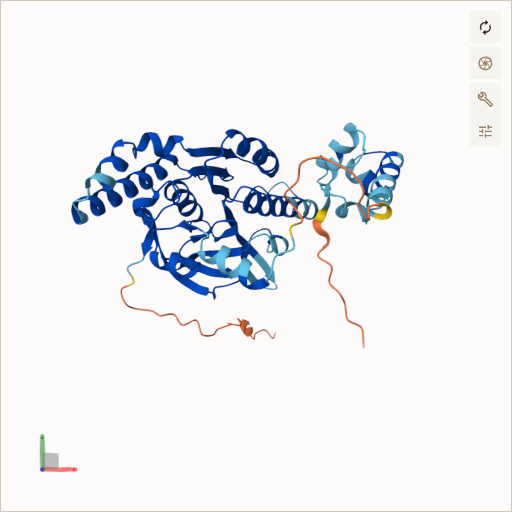
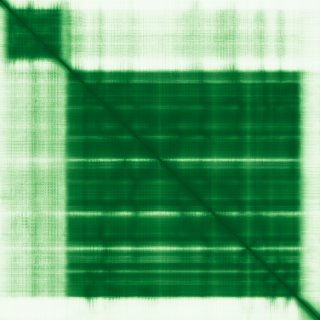
Predicted protein structure

Clinical relevance (Genomics England PanelApp)

Diagnostic Grade (Green)

  • Adult solid tumours cancer susceptibility

    MONOALLELIC, autosomal or pseudoautosomal, imprinted status unknown
  • Adult solid tumours for rare disease

    MONOALLELIC, autosomal or pseudoautosomal, imprinted status unknown
  • COVID-19 research

    BIALLELIC, autosomal or pseudoautosomal
  • DDG2P

    BIALLELIC, autosomal or pseudoautosomal
  • Familial breast cancer

    MONOALLELIC, autosomal or pseudoautosomal, NOT imprinted
  • Inherited breast cancer and ovarian cancer

    MONOALLELIC, autosomal or pseudoautosomal, imprinted status unknown
  • Inherited ovarian cancer (without breast cancer)

    MONOALLELIC, autosomal or pseudoautosomal, NOT imprinted
  • Ovarian cancer pertinent cancer susceptibility

    MONOALLELIC, autosomal or pseudoautosomal, NOT imprinted

+13 more panels — install the extension to see the full list inline on any page.

Disease associations (Open Targets)

  • Hereditary breast and ovarian cancer syndrome

    0.80
  • Fanconi anemia complementation group O

    0.75
  • Fanconi anemia

    0.70
  • hereditary breast ovarian cancer syndrome

    0.66
  • ovarian cancer

    0.66
  • cancer

    0.63
  • RAD51C-related cancer predisposition

    0.62
  • Inherited cancer-predisposing syndrome

    0.58
  • hereditary neoplastic syndrome

    0.58
  • ovarian carcinoma

    0.56

Score is the Open Targets composite evidence score (0-1). Higher = stronger gene-disease association.

Protein function (UniProt)

DNA repair protein RAD51 homolog 3

Essential for the homologous recombination (HR) pathway of DNA repair. Involved in the homologous recombination repair (HRR) pathway of double-stranded DNA breaks arising during DNA replication or induced by DNA-damaging agents. Part of the RAD51 paralog protein complexes BCDX2 and CX3 which act at different stages of the BRCA1-BRCA2-dependent HR pathway. Upon DNA damage, BCDX2 seems to act downstream of BRCA2 recruitment and upstream of RAD51 recruitment; CX3 seems to act downstream of RAD51 recruitment; both complexes bind predominantly to the intersection of the four duplex arms of the Holliday junction (HJ) and to junction of replication forks. The BCDX2 complex was originally reported to bind single-stranded DNA, single-stranded gaps in duplex DNA and specifically to nicks in duplex DNA. The BCDX2 subcomplex RAD51B:RAD51C exhibits single-stranded DNA-dependent ATPase activity suggesting an involvement in early stages of the HR pathway. Involved in RAD51 foci formation in response to DNA damage suggesting an involvement in early stages of HR probably in the invasion step. Has an early function in DNA repair in facilitating phosphorylation of the checkpoint kinase CHEK2 and thereby transduction of the damage signal, leading to cell cycle arrest and HR activation. Participates in branch migration and HJ resolution and thus is important for processing HR intermediates late in the DNA repair process; the function may be linked to the CX3 complex. Part of a PALB2-scaffolded HR complex containing BRCA2 and which is thought to play a role in DNA repair by HR. Protects RAD51 from ubiquitin-mediated degradation that is enhanced following DNA damage. Plays a role in regulating mitochondrial DNA copy number under conditions of oxidative stress in the presence of RAD51 and XRCC3. Contributes to DNA cross-link resistance, sister chromatid cohesion and genomic stability. Involved in maintaining centrosome number in mitosis

Curated MONDO disease pages that list RAD51C among their top associated genes.

Data sources: HGNC (CC BY 4.0), AlphaFold (CC BY 4.0, Jumper et al. Nature 2021), Genomics England PanelApp (CC BY 4.0), ClinGen, Open Targets (CC0), UniProt.

Not for sole clinical decision-making. Always verify against primary sources.