Skip to content
GenoLensGenoLens

RAG2

Chr 11p12

recombination activating 2

MANE:
ENST00000311485.8

Annotations refreshed 11 hours ago.

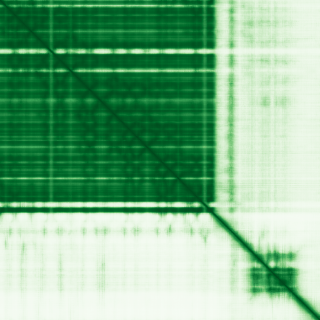
Predicted protein structure

Clinical relevance (Genomics England PanelApp)

Diagnostic Grade (Green)

  • COVID-19 research

    BIALLELIC, autosomal or pseudoautosomal
  • Gastrointestinal epithelial barrier disorders

    BIALLELIC, autosomal or pseudoautosomal
  • Infantile enterocolitis & monogenic inflammatory bowel disease

    BIALLELIC, autosomal or pseudoautosomal
  • Primary immunodeficiency or monogenic inflammatory bowel disease

    BIALLELIC, autosomal or pseudoautosomal
  • Rare genetic inflammatory skin disorders

    BIALLELIC, autosomal or pseudoautosomal
  • Respiratory ciliopathies including non-CF bronchiectasis

    BIALLELIC, autosomal or pseudoautosomal

Disease associations (Open Targets)

  • severe combined immunodeficiency, autosomal recessive, T cell-negative, B cell-negative, NK cell-positive

    0.80
  • combined immunodeficiency with skin granulomas

    0.75
  • Omenn syndrome

    0.72
  • recombinase activating gene 2 deficiency

    0.67
  • histiocytic medullary reticulosis

    0.57
  • severe combined immunodeficiency

    0.53
  • T-B+ severe combined immunodeficiency

    0.53
  • T-B- severe combined immunodeficiency

    0.53
  • inborn error of immunity

    0.50
  • T-B+ severe combined immunodeficiency due to JAK3 deficiency

    0.50

Score is the Open Targets composite evidence score (0-1). Higher = stronger gene-disease association.

Protein function (UniProt)

V(D)J recombination-activating protein 2

Core component of the RAG complex, a multiprotein complex that mediates the DNA cleavage phase during V(D)J recombination. V(D)J recombination assembles a diverse repertoire of immunoglobulin and T-cell receptor genes in developing B and T-lymphocytes through rearrangement of different V (variable), in some cases D (diversity), and J (joining) gene segments. DNA cleavage by the RAG complex occurs in 2 steps: a first nick is introduced in the top strand immediately upstream of the heptamer, generating a 3'-hydroxyl group that can attack the phosphodiester bond on the opposite strand in a direct transesterification reaction, thereby creating 4 DNA ends: 2 hairpin coding ends and 2 blunt, 5'-phosphorylated ends. The chromatin structure plays an essential role in the V(D)J recombination reactions and the presence of histone H3 trimethylated at 'Lys-4' (H3K4me3) stimulates both the nicking and haipinning steps. The RAG complex also plays a role in pre-B cell allelic exclusion, a process leading to expression of a single immunoglobulin heavy chain allele to enforce clonality and monospecific recognition by the B-cell antigen receptor (BCR) expressed on individual B-lymphocytes. The introduction of DNA breaks by the RAG complex on one immunoglobulin allele induces ATM-dependent repositioning of the other allele to pericentromeric heterochromatin, preventing accessibility to the RAG complex and recombination of the second allele. In the RAG complex, RAG2 is not the catalytic component but is required for all known catalytic activities mediated by RAG1. It probably acts as a sensor of chromatin state that recruits the RAG complex to H3K4me3 (By similarity)

Data sources: HGNC (CC BY 4.0), AlphaFold (CC BY 4.0, Jumper et al. Nature 2021), Genomics England PanelApp (CC BY 4.0), ClinGen, Open Targets (CC0), UniProt.

Not for sole clinical decision-making. Always verify against primary sources.