
AlphaFold predicted structure
RAI1 · Q7Z5J4
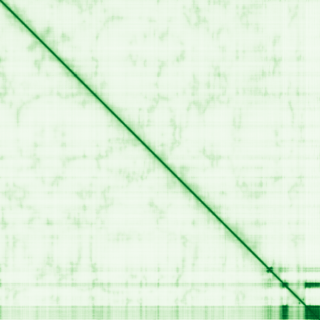
Mean pLDDT
39.5/ 100
Very low
1,906 residues
Confidence breakdown
- Very high(≥ 90)5%
- Confident(70–90)3%
- Low(50–70)3%
- Very low(< 50)89%
Open interactive 3D viewer
AlphaFold (Jumper et al., 2021) · CC BY 4.0
retinoic acid induced 1
Annotations refreshed 2 months ago.
Diagnostic Grade (Green)
DDG2P
MONOALLELIC, autosomal or pseudoautosomal, imprinted status unknownFetal anomalies
MONOALLELIC, autosomal or pseudoautosomal, imprinted status unknownIntellectual disability
MONOALLELIC, autosomal or pseudoautosomal, NOT imprintedClefting
MONOALLELIC, autosomal or pseudoautosomal, imprinted status unknownSmith-Magenis syndrome
hereditary disease
Intellectual disability
rai1-related disorder
coffee consumption
combined immunodeficiency due to ORAI1 deficiency
developmental disability
type 2 diabetes mellitus
skin neoplasm
Eczematoid dermatitis
Score is the Open Targets composite evidence score (0-1). Higher = stronger gene-disease association.
Retinoic acid-induced protein 1
Transcriptional regulator of the circadian clock components: CLOCK, BMAL1, BMAL2, PER1/3, CRY1/2, NR1D1/2 and RORA/C. Positively regulates the transcriptional activity of CLOCK a core component of the circadian clock. Regulates transcription through chromatin remodeling by interacting with other proteins in chromatin as well as proteins in the basic transcriptional machinery. May be important for embryonic and postnatal development. May be involved in neuronal differentiation
RAI1 · Q7Z5J4
Mean pLDDT
39.5/ 100
Very low
1,906 residues
Confidence breakdown
AlphaFold (Jumper et al., 2021) · CC BY 4.0