
AlphaFold predicted structure
RARB · P10826
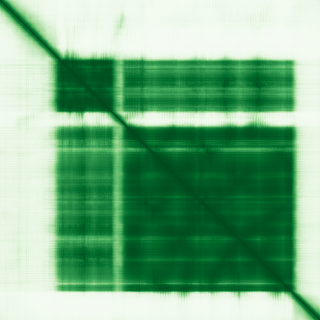
Mean pLDDT
79.7/ 100
Confident
455 residues
Confidence breakdown
- Very high(≥ 90)66%
- Confident(70–90)4%
- Low(50–70)6%
- Very low(< 50)24%
Open interactive 3D viewer
AlphaFold (Jumper et al., 2021) · CC BY 4.0
retinoic acid receptor beta
Annotations refreshed 2 months ago.
Diagnostic Grade (Green)
Anophthalmia or microphthalmia
BOTH monoallelic and biallelic, autosomal or pseudoautosomalDDG2P
BOTH monoallelic and biallelic, autosomal or pseudoautosomalFetal anomalies
BOTH monoallelic and biallelic, autosomal or pseudoautosomalIntellectual disability
BOTH monoallelic and biallelic, autosomal or pseudoautosomalOcular coloboma
BOTH monoallelic and biallelic, autosomal or pseudoautosomalStructural eye disease
BOTH monoallelic and biallelic, autosomal or pseudoautosomalClefting
BIALLELIC, autosomal or pseudoautosomalMonogenic hearing loss
microphthalmia, syndromic 12
Matthew-Wood syndrome
acne
acute promyelocytic leukemia
psoriasis
psoriasis vulgaris
hyperpigmentation of the skin
freckles
neoplasm
microphthalmia
Score is the Open Targets composite evidence score (0-1). Higher = stronger gene-disease association.
Retinoic acid receptor beta
Receptor for retinoic acid. Retinoic acid receptors bind as heterodimers to their target response elements in response to their ligands, all-trans or 9-cis retinoic acid, and regulate gene expression in various biological processes. The RXR/RAR heterodimers bind to the retinoic acid response elements (RARE) composed of tandem 5'-AGGTCA-3' sites known as DR1-DR5. In the absence or presence of hormone ligand, acts mainly as an activator of gene expression due to weak binding to corepressors (PubMed:12554770). The RXRA/RARB heterodimer can act as a repressor on the DR1 element and as an activator on the DR5 element (PubMed:29021580). In concert with RARG, required for skeletal growth, matrix homeostasis and growth plate function (By similarity)
Curated MONDO disease pages that list RARB among their top associated genes.
RARB · P10826
Mean pLDDT
79.7/ 100
Confident
455 residues
Confidence breakdown
AlphaFold (Jumper et al., 2021) · CC BY 4.0