
AlphaFold predicted structure
RBCK1 · Q9BYM8
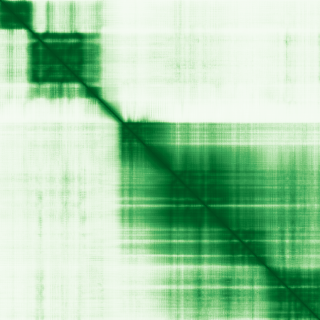
Mean pLDDT
84.0/ 100
Confident
510 residues
Confidence breakdown
- Very high(≥ 90)44%
- Confident(70–90)45%
- Low(50–70)4%
- Very low(< 50)8%
Open interactive 3D viewer
AlphaFold (Jumper et al., 2021) · CC BY 4.0
RANBP2-type and C3HC4-type zinc finger containing 1
Annotations refreshed 2 months ago.
Diagnostic Grade (Green)
Autoinflammatory disorders
BIALLELIC, autosomal or pseudoautosomalCOVID-19 research
BIALLELIC, autosomal or pseudoautosomalDDG2P
BIALLELIC, autosomal or pseudoautosomalGlycogen storage disease
BIALLELIC, autosomal or pseudoautosomalLikely inborn error of metabolism
BIALLELIC, autosomal or pseudoautosomalPrimary immunodeficiency or monogenic inflammatory bowel disease
BIALLELIC, autosomal or pseudoautosomalRhabdomyolysis and metabolic muscle disorders
BIALLELIC, autosomal or pseudoautosomalUndiagnosed metabolic disorders
BIALLELIC, autosomal or pseudoautosomal+4 more panels — install the extension to see the full list inline on any page.
polyglucosan body myopathy 1 with or without immunodeficiency
polyglucosan body myopathy
autoinflammatory syndrome with pyogenic bacterial infection and amylopectinosis
hereditary disease
neurodegenerative disease
autoimmune disorder of central nervous system
glycogen storage disease due to glycogen branching enzyme deficiency
Alzheimer disease
alcohol drinking
hepatocellular carcinoma
Score is the Open Targets composite evidence score (0-1). Higher = stronger gene-disease association.
RanBP-type and C3HC4-type zinc finger-containing protein 1
E3 ubiquitin-protein ligase, which accepts ubiquitin from specific E2 ubiquitin-conjugating enzymes, such as UBE2L3/UBCM4, and then transfers it to substrates (PubMed:12629548, PubMed:17449468, PubMed:18711448). Functions as an E3 ligase for oxidized IREB2 and both heme and oxygen are necessary for IREB2 ubiquitination (PubMed:12629548). Promotes ubiquitination of TAB2 and IRF3 and their degradation by the proteasome (PubMed:17449468, PubMed:18711448). Component of the LUBAC complex which conjugates linear ('Met-1'-linked) polyubiquitin chains to substrates and plays a key role in NF-kappa-B activation and regulation of inflammation (PubMed:17006537, PubMed:19136968, PubMed:21455173, PubMed:21455180, PubMed:21455181). LUBAC conjugates linear polyubiquitin to IKBKG and RIPK1 and is involved in activation of the canonical NF-kappa-B and the JNK signaling pathways (PubMed:17006537, PubMed:19136968, PubMed:21455173, PubMed:21455180, PubMed:21455181). Linear ubiquitination mediated by the LUBAC complex interferes with TNF-induced cell death and thereby prevents inflammation (PubMed:17006537, PubMed:21455173, PubMed:21455180, PubMed:21455181). LUBAC is recruited to the TNF-R1 signaling complex (TNF-RSC) following polyubiquitination of TNF-RSC components by BIRC2 and/or BIRC3 and to conjugate linear polyubiquitin to IKBKG and possibly other components contributing to the stability of the complex (PubMed:17006537, PubMed:19136968, PubMed:21455173, PubMed:21455180, PubMed:21455181). The LUBAC complex is also involved in innate immunity by conjugating linear polyubiquitin chains at the surface of bacteria invading the cytosol to form the ubiquitin coat surrounding bacteria (PubMed:28481331). LUBAC is not able to initiate formation of the bacterial ubiquitin coat, and can only promote formation of linear polyubiquitins on pre-existing ubiquitin (PubMed:28481331). The bacterial ubiquitin coat acts as an 'eat-me' signal for xenophagy and promotes NF-kappa-B activation (PubMed:28481331). Together with OTULIN, the LUBAC complex regulates the canonical Wnt signaling during angiogenesis (PubMed:23708998). Binds polyubiquitin of different linkage types (PubMed:20005846, PubMed:21455181)
RBCK1 · Q9BYM8
Mean pLDDT
84.0/ 100
Confident
510 residues
Confidence breakdown
AlphaFold (Jumper et al., 2021) · CC BY 4.0