
AlphaFold predicted structure
RDH11 · Q8TC12
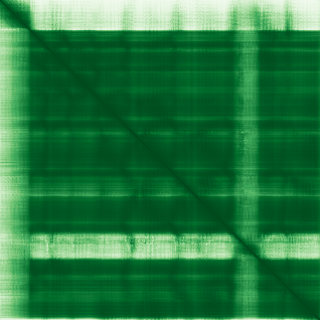
Mean pLDDT
91.9/ 100
Very high
318 residues
Confidence breakdown
- Very high(≥ 90)80%
- Confident(70–90)11%
- Low(50–70)9%
- Very low(< 50)0%
Open interactive 3D viewer
AlphaFold (Jumper et al., 2021) · CC BY 4.0
retinol dehydrogenase 11
Annotations refreshed 3 months ago.
Moderate Evidence (Amber)
Bilateral congenital or childhood onset cataracts
BIALLELIC, autosomal or pseudoautosomalIntellectual disability
BIALLELIC, autosomal or pseudoautosomalLimb girdle muscular dystrophies, myofibrillar myopathies and distal myopathies
BIALLELIC, autosomal or pseudoautosomalMalformations of cortical development
BIALLELIC, autosomal or pseudoautosomalRetinal disorders
BIALLELIC, autosomal or pseudoautosomalGenetic malformation syndrome with short stature
neurodegenerative disease
Retinal dystrophy
acute tonsillitis
Neurodevelopmental delay
cervical carcinoma
optic atrophy
open-angle glaucoma
myopia
degeneration of macula and posterior pole
Score is the Open Targets composite evidence score (0-1). Higher = stronger gene-disease association.
Retinol dehydrogenase 11
Retinol dehydrogenase with a clear preference for NADP. Displays high activity towards 9-cis, 11-cis and all-trans-retinol, and to a lesser extent on 13-cis-retinol (PubMed:12036956, PubMed:12226107, PubMed:29410696). Exhibits a low reductive activity towards unsaturated medium-chain aldehydes such as cis -6-nonenal and no activity toward nonanal or 4-hydroxy-nonenal (PubMed:15865448). Has no dehydrogenase activity towards steroid (PubMed:12036956, PubMed:12226107)
RDH11 · Q8TC12
Mean pLDDT
91.9/ 100
Very high
318 residues
Confidence breakdown
AlphaFold (Jumper et al., 2021) · CC BY 4.0