
AlphaFold predicted structure
RELB · Q01201
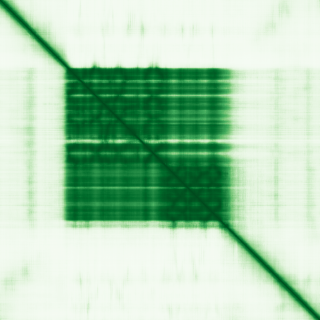
Mean pLDDT
68.8/ 100
Low
579 residues
Confidence breakdown
- Very high(≥ 90)41%
- Confident(70–90)9%
- Low(50–70)11%
- Very low(< 50)39%
Open interactive 3D viewer
AlphaFold (Jumper et al., 2021) · CC BY 4.0
RELB proto-oncogene, NF-kB subunit
Annotations refreshed 2 months ago.
Diagnostic Grade (Green)
COVID-19 research
BIALLELIC, autosomal or pseudoautosomalPrimary immunodeficiency or monogenic inflammatory bowel disease
BIALLELIC, autosomal or pseudoautosomalimmunodeficiency 53
Recurrent infections
autoimmune disorder of central nervous system
neoplasm
coronary artery disorder
placenta praevia
sinusitis
posterior cortical atrophy
B-cell chronic lymphocytic leukemia
glioma
Score is the Open Targets composite evidence score (0-1). Higher = stronger gene-disease association.
Transcription factor RelB
NF-kappa-B is a pleiotropic transcription factor which is present in almost all cell types and is involved in many biological processed such as inflammation, immunity, differentiation, cell growth, tumorigenesis and apoptosis. NF-kappa-B is a homo- or heterodimeric complex formed by the Rel-like domain-containing proteins RELA/p65, RELB, NFKB1/p105, NFKB1/p50, REL and NFKB2/p52. The dimers bind at kappa-B sites in the DNA of their target genes and the individual dimers have distinct preferences for different kappa-B sites that they can bind with distinguishable affinity and specificity. Different dimer combinations act as transcriptional activators or repressors, respectively. NF-kappa-B is controlled by various mechanisms of post-translational modification and subcellular compartmentalization as well as by interactions with other cofactors or corepressors. NF-kappa-B complexes are held in the cytoplasm in an inactive state complexed with members of the NF-kappa-B inhibitor (I-kappa-B) family. In a conventional activation pathway, I-kappa-B is phosphorylated by I-kappa-B kinases (IKKs) in response to different activators, subsequently degraded thus liberating the active NF-kappa-B complex which translocates to the nucleus. NF-kappa-B heterodimeric RelB-p50 and RelB-p52 complexes are transcriptional activators. RELB neither associates with DNA nor with RELA/p65 or REL. Stimulates promoter activity in the presence of NFKB2/p49. As a member of the NUPR1/RELB/IER3 survival pathway, may provide pancreatic ductal adenocarcinoma with remarkable resistance to cell stress, such as starvation or gemcitabine treatment. Regulates the circadian clock by repressing the transcriptional activator activity of the CLOCK-BMAL1 heterodimer in a CRY1/CRY2 independent manner. Increased repression of the heterodimer is seen in the presence of NFKB2/p52. Is required for both T and B lymphocyte maturation and function (PubMed:26385063)
Curated MONDO disease pages that list RELB among their top associated genes.
RELB · Q01201
Mean pLDDT
68.8/ 100
Low
579 residues
Confidence breakdown
AlphaFold (Jumper et al., 2021) · CC BY 4.0