
AlphaFold predicted structure
RGR · P47804
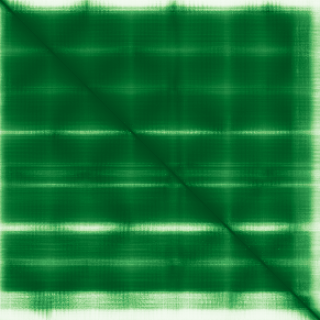
Mean pLDDT
90.3/ 100
Very high
291 residues
Confidence breakdown
- Very high(≥ 90)79%
- Confident(70–90)11%
- Low(50–70)7%
- Very low(< 50)4%
Open interactive 3D viewer
AlphaFold (Jumper et al., 2021) · CC BY 4.0
retinal G protein coupled receptor
Annotations refreshed 2 months ago.
Diagnostic Grade (Green)
Retinal disorders
MONOALLELIC, autosomal or pseudoautosomal, imprinted status unknownGlaucoma (developmental)
Structural eye disease
BOTH monoallelic and biallelic, autosomal or pseudoautosomalretinitis pigmentosa
myopia
Retinal dystrophy
primary angle-closure glaucoma
Progressive visual loss
refractive error
Abnormality of refraction
cone dystrophy
optic atrophy
open-angle glaucoma
Score is the Open Targets composite evidence score (0-1). Higher = stronger gene-disease association.
RPE-retinal G protein-coupled receptor
Non-visual opsin that functions as a light-dependent facilitator of retinoid isomerization and trafficking in retinal pigment epithelium (RPE) and Mueller glia (PubMed:18474598). Participates in a photic visual cycle by complementing the classical enzymatic RPE65/RDH pathway for chromophore regeneration (By similarity). Binds all-trans-retinal via a conserved Schiff-base lysine and, upon illumination, promotes photoisomerization of all-trans-retinal to 11-cis-retinal required for regeneration of visual pigments (By similarity). Also mediates light-dependent mobilization of stored all-trans-retinyl esters from lipid droplets to endoplasmic reticulum membranes, facilitating their processing into 11-cis-retinoids (PubMed:18474598). May also modulate isomerohydrolase activity independent of light (By similarity). Although RGR is structurally a GPCR-family opsin, there is no consistent evidence that RGR activates G proteins or initiates a canonical second-messenger signaling cascade (Probable)
Curated MONDO disease pages that list RGR among their top associated genes.
RGR · P47804
Mean pLDDT
90.3/ 100
Very high
291 residues
Confidence breakdown
AlphaFold (Jumper et al., 2021) · CC BY 4.0