
AlphaFold predicted structure
RHO · P08100
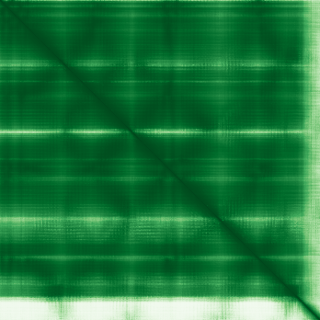
Mean pLDDT
88.8/ 100
Confident
348 residues
Confidence breakdown
- Very high(≥ 90)68%
- Confident(70–90)22%
- Low(50–70)5%
- Very low(< 50)5%
Open interactive 3D viewer
AlphaFold (Jumper et al., 2021) · CC BY 4.0
rhodopsin
Annotations refreshed 2 months ago.
Diagnostic Grade (Green)
Retinal disorders
BOTH monoallelic and biallelic, autosomal or pseudoautosomalGlaucoma (developmental)
Structural eye disease
BOTH monoallelic and biallelic, autosomal or pseudoautosomalretinitis pigmentosa
congenital stationary night blindness
Retinal dystrophy
fundus albipunctatus
retinitis punctata albescens
retinal disorder
autosomal recessive primary microcephaly
Rod-cone dystrophy
Cone rod dystrophy
Coats disease
Score is the Open Targets composite evidence score (0-1). Higher = stronger gene-disease association.
Rhodopsin
G protein-coupled photoreceptor that activates the G protein transducin (t) signaling pathway in response to light and is essential for image-forming vision under low-light conditions (PubMed:6140680, PubMed:7846071, PubMed:8107847). Required for postnatal photoreceptor cell viability (PubMed:12566452, PubMed:2215617). Activation occurs when the covalently bound 11-cis-retinal chromophore absorbs a photon and isomerizes to all-trans-retinal, inducing a conformational change in the opsin that triggers G protein-mediated phototransduction (Probable) (PubMed:26200343, PubMed:28753425, PubMed:8107847). Signal termination occurs via receptor phosphorylation, which promotes binding of arrestin (SAG) and displacement of the G protein alpha subunit (Probable) (PubMed:26200343)
Curated MONDO disease pages that list RHO among their top associated genes.
RHO · P08100
Mean pLDDT
88.8/ 100
Confident
348 residues
Confidence breakdown
AlphaFold (Jumper et al., 2021) · CC BY 4.0