
AlphaFold predicted structure
RHOA · P61586
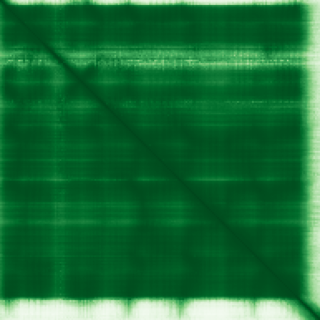
Mean pLDDT
93.6/ 100
Very high
193 residues
Confidence breakdown
- Very high(≥ 90)89%
- Confident(70–90)5%
- Low(50–70)2%
- Very low(< 50)5%
Open interactive 3D viewer
AlphaFold (Jumper et al., 2021) · CC BY 4.0
ras homolog family member A
Annotations refreshed 2 months ago.
Diagnostic Grade (Green)
Mosaic skin disorders - deep sequencing
MONOALLELIC, autosomal or pseudoautosomal, NOT imprintedStructural eye disease
MONOALLELIC, autosomal or pseudoautosomal, imprinted status unknownFetal anomalies
MONOALLELIC, autosomal or pseudoautosomal, NOT imprintedectodermal dysplasia with facial dysmorphism and acral, ocular, and brain anomalies
Burkitt lymphoma
gastric adenocarcinoma
urinary bladder cancer
angioimmunoblastic T-cell lymphoma
gastric carcinoma
adult T-cell leukemia/lymphoma
peripheral T-cell lymphoma, not otherwise specified
gastric intestinal type adenocarcinoma
diffuse gastric adenocarcinoma
Score is the Open Targets composite evidence score (0-1). Higher = stronger gene-disease association.
Transforming protein RhoA
Small GTPase which cycles between an active GTP-bound and an inactive GDP-bound state. Mainly associated with cytoskeleton organization, in active state binds to a variety of effector proteins to regulate cellular responses such as cytoskeletal dynamics, cell migration and cell cycle (PubMed:23871831). Regulates a signal transduction pathway linking plasma membrane receptors to the assembly of focal adhesions and actin stress fibers (PubMed:31570889, PubMed:8910519, PubMed:9121475). Involved in a microtubule-dependent signal that is required for the myosin contractile ring formation during cell cycle cytokinesis (PubMed:12900402, PubMed:16236794). Plays an essential role in cleavage furrow formation. Required for the apical junction formation of keratinocyte cell-cell adhesion (PubMed:20974804, PubMed:23940119). Essential for the SPATA13-mediated regulation of cell migration and adhesion assembly and disassembly (PubMed:19934221). The MEMO1-RHOA-DIAPH1 signaling pathway plays an important role in ERBB2-dependent stabilization of microtubules at the cell cortex. It controls the localization of APC and CLASP2 to the cell membrane, via the regulation of GSK3B activity. In turn, membrane-bound APC allows the localization of the MACF1 to the cell membrane, which is required for microtubule capture and stabilization (PubMed:20937854). Involved in the reorientation of endothelial cells and their actin stress fibers in response to cellular mechantransduction-mediated activation by ARHGEF40 (By similarity). Regulates KCNA2 potassium channel activity by reducing its location at the cell surface in response to CHRM1 activation; promotes KCNA2 endocytosis (PubMed:19403695, PubMed:9635436). Acts as an allosteric activator of guanine nucleotide exchange factor ECT2 by binding in its activated GTP-bound form to the PH domain of ECT2 which stimulates the release of PH inhibition and promotes the binding of substrate RHOA to the ECT2 catalytic center (PubMed:31888991). May be an activator of PLCE1 (PubMed:16103226). In neurons, involved in the inhibition of the initial spine growth. Upon activation by CaMKII, modulates dendritic spine structural plasticity by relaying CaMKII transient activation to synapse-specific, long-term signaling (By similarity). Acts as a regulator of platelet alpha-granule release during activation and aggregation of platelets (By similarity). When activated by DAAM1 may signal centrosome maturation and chromosomal segregation during cell division. May also be involved in contractile ring formation during cytokinesis
Curated MONDO disease pages that list RHOA among their top associated genes.
RHOA · P61586
Mean pLDDT
93.6/ 100
Very high
193 residues
Confidence breakdown
AlphaFold (Jumper et al., 2021) · CC BY 4.0