AlphaFold predicted structure
RHOBTB2 · Q9BYZ6
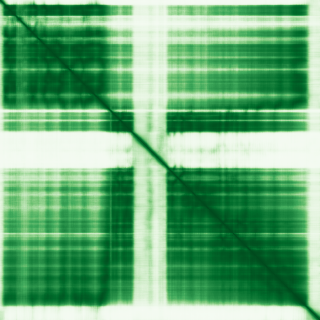
Mean pLDDT
81.2/ 100
Confident
727 residues
Confidence breakdown
- Very high(≥ 90)62%
- Confident(70–90)17%
- Low(50–70)5%
- Very low(< 50)16%
AlphaFold (Jumper et al., 2021) · CC BY 4.0
Rho related BTB domain containing 2
Annotations refreshed 9 hours ago.
Diagnostic Grade (Green)
DDG2P
MONOALLELIC, autosomal or pseudoautosomal, imprinted status unknownEarly onset or syndromic epilepsy
MONOALLELIC, autosomal or pseudoautosomal, imprinted status unknownFetal anomalies
BOTH monoallelic and biallelic, autosomal or pseudoautosomalIntellectual disability
MONOALLELIC, autosomal or pseudoautosomal, imprinted status unknownParoxysmal central nervous system disorders
MONOALLELIC, autosomal or pseudoautosomal, NOT imprintedgenetic developmental and epileptic encephalopathy
hereditary disease
developmental and epileptic encephalopathy
complex neurodevelopmental disorder
basal cell carcinoma
Seizure
renal carcinoma
clear cell renal carcinoma
alternating hemiplegia of childhood
early-infantile DEE
Score is the Open Targets composite evidence score (0-1). Higher = stronger gene-disease association.
Rho-related BTB domain-containing protein 2
Regulator of cell proliferation and apoptosis (PubMed:21801820). It likely functions as a substrate-adapter that recruits key substrates, e.g. MSI2, to CUL3-based ubiquitin ligase complexes for degradation (PubMed:15107402, PubMed:27941885). Required for MSI2 ubiquitination and degradation (PubMed:27941885)
RHOBTB2 · Q9BYZ6

Mean pLDDT
81.2/ 100
Confident
727 residues
Confidence breakdown
AlphaFold (Jumper et al., 2021) · CC BY 4.0