
AlphaFold predicted structure
RIPK1 · Q13546
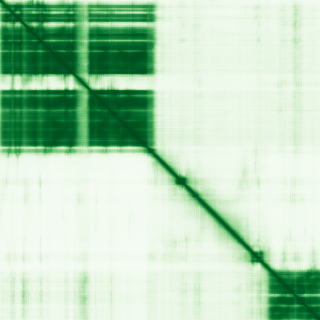
Mean pLDDT
69.8/ 100
Low
671 residues
Confidence breakdown
- Very high(≥ 90)32%
- Confident(70–90)27%
- Low(50–70)10%
- Very low(< 50)31%
Open interactive 3D viewer
AlphaFold (Jumper et al., 2021) · CC BY 4.0
receptor interacting serine/threonine kinase 1
Annotations refreshed 2 months ago.
Diagnostic Grade (Green)
Autoinflammatory disorders
BOTH monoallelic and biallelic, autosomal or pseudoautosomalCOVID-19 research
BOTH monoallelic and biallelic, autosomal or pseudoautosomalPrimary immunodeficiency or monogenic inflammatory bowel disease
BOTH monoallelic and biallelic, autosomal or pseudoautosomalInfantile enterocolitis & monogenic inflammatory bowel disease
BIALLELIC, autosomal or pseudoautosomalautoinflammation with episodic fever and lymphadenopathy
immunodeficiency 57
neurodegenerative disease
severe acute respiratory syndrome
inborn error of immunity
IL10-related early-onset inflammatory bowel disease
hereditary disease
Alzheimer disease
Parkinson disease
multiple sclerosis
Score is the Open Targets composite evidence score (0-1). Higher = stronger gene-disease association.
Receptor-interacting serine/threonine-protein kinase 1
Serine-threonine kinase which is a key regulator of TNF-mediated apoptosis, necroptosis and inflammatory pathways (PubMed:17703191, PubMed:24144979, PubMed:31827280, PubMed:31827281, PubMed:32657447, PubMed:35831301). Exhibits kinase activity-dependent functions that regulate cell death and kinase-independent scaffold functions regulating inflammatory signaling and cell survival (PubMed:11101870, PubMed:19524512, PubMed:19524513, PubMed:29440439, PubMed:30988283). Has kinase-independent scaffold functions: upon binding of TNF to TNFR1, RIPK1 is recruited to the TNF-R1 signaling complex (TNF-RSC also known as complex I) where it acts as a scaffold protein promoting cell survival, in part, by activating the canonical NF-kappa-B pathway (By similarity). Kinase activity is essential to regulate necroptosis and apoptosis, two parallel forms of cell death: upon activation of its protein kinase activity, regulates assembly of two death-inducing complexes, namely complex IIa (RIPK1-FADD-CASP8), which drives apoptosis, and the complex IIb (RIPK1-RIPK3-MLKL), which drives necroptosis (By similarity). RIPK1 is required to limit CASP8-dependent TNFR1-induced apoptosis (By similarity). In normal conditions, RIPK1 acts as an inhibitor of RIPK3-dependent necroptosis, a process mediated by RIPK3 component of complex IIb, which catalyzes phosphorylation of MLKL upon induction by ZBP1 (PubMed:19524512, PubMed:19524513, PubMed:29440439, PubMed:30988283). Inhibits RIPK3-mediated necroptosis via FADD-mediated recruitment of CASP8, which cleaves RIPK1 and limits TNF-induced necroptosis (PubMed:19524512, PubMed:19524513, PubMed:29440439, PubMed:30988283). Required to inhibit apoptosis and necroptosis during embryonic development: acts by preventing the interaction of TRADD with FADD thereby limiting aberrant activation of CASP8 (By similarity). In addition to apoptosis and necroptosis, also involved in inflammatory response by promoting transcriptional production of pro-inflammatory cytokines, such as interleukin-6 (IL6) (PubMed:31827280, PubMed:31827281). Phosphorylates RIPK3: RIPK1 and RIPK3 undergo reciprocal auto- and trans-phosphorylation (PubMed:19524513). Phosphorylates DAB2IP at 'Ser-728' in a TNF-dependent manner, and thereby activates the MAP3K5-JNK apoptotic cascade (PubMed:15310755, PubMed:17389591). Required for ZBP1-induced NF-kappa-B activation in response to DNA damage (By similarity)
Curated MONDO disease pages that list RIPK1 among their top associated genes.
RIPK1 · Q13546
Mean pLDDT
69.8/ 100
Low
671 residues
Confidence breakdown
AlphaFold (Jumper et al., 2021) · CC BY 4.0