
AlphaFold predicted structure
RLIM · Q9NVW2
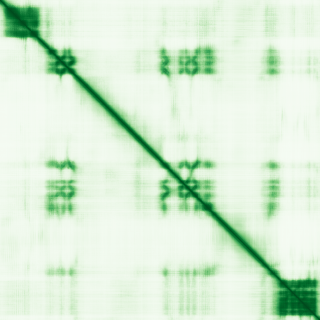
Mean pLDDT
49.7/ 100
Very low
624 residues
Confidence breakdown
- Very high(≥ 90)8%
- Confident(70–90)14%
- Low(50–70)17%
- Very low(< 50)62%
Open interactive 3D viewer
AlphaFold (Jumper et al., 2021) · CC BY 4.0
ring finger protein, LIM domain interacting
Annotations refreshed 3 months ago.
Diagnostic Grade (Green)
DDG2P
X-LINKED: hemizygous mutation in males, biallelic mutations in femalesFetal anomalies
X-LINKED: hemizygous mutation in males, monoallelic mutations in females may cause disease (may be less severe, later onset than males)Intellectual disability
X-LINKED: hemizygous mutation in males, biallelic mutations in femalesX-linked non-syndromic intellectual disability
Intellectual disability
neurodegenerative disease
hereditary disease
non-syndromic X-linked intellectual disability
complex neurodevelopmental disorder
Global developmental delay
prostate cancer
Familial prostate cancer
cask-related x-linked intellectual disability
Score is the Open Targets composite evidence score (0-1). Higher = stronger gene-disease association.
E3 ubiquitin-protein ligase RLIM
E3 ubiquitin-protein ligase that acts as a negative coregulator for LIM homeodomain transcription factors by mediating the ubiquitination and subsequent degradation of LIM cofactors LDB1 and LDB2 and by mediating the recruitment the SIN3a/histone deacetylase corepressor complex (PubMed:29742418, PubMed:33953269). Ubiquitination and degradation of LIM cofactors LDB1 and LDB2 allows DNA-bound LIM homeodomain transcription factors to interact with other protein partners such as RLIM. Plays a role in telomere length-mediated growth suppression by mediating the ubiquitination and degradation of TERF1. By targeting ZFP42/REX1 for degradation, acts as an activator of random inactivation of X chromosome in the embryo, a stochastic process in which one X chromosome is inactivated to minimize sex-related dosage differences of X-encoded genes in somatic cells of female placental mammals. E3 ubiquitin-protein ligase is required for proper regulation of neural cell differentiation from embryonic stem cells (By similarity)
RLIM · Q9NVW2
Mean pLDDT
49.7/ 100
Very low
624 residues
Confidence breakdown
AlphaFold (Jumper et al., 2021) · CC BY 4.0