
AlphaFold predicted structure
RNF168 · Q8IYW5
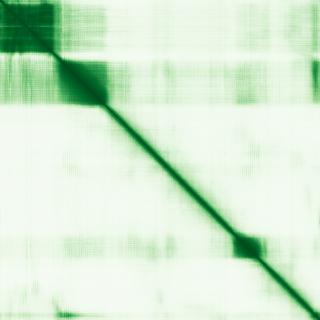
Mean pLDDT
61.1/ 100
Low
571 residues
Confidence breakdown
- Very high(≥ 90)29%
- Confident(70–90)8%
- Low(50–70)11%
- Very low(< 50)52%
Open interactive 3D viewer
AlphaFold (Jumper et al., 2021) · CC BY 4.0
ring finger protein 168
Annotations refreshed 2 months ago.
Diagnostic Grade (Green)
COVID-19 research
BIALLELIC, autosomal or pseudoautosomalPrimary immunodeficiency or monogenic inflammatory bowel disease
BIALLELIC, autosomal or pseudoautosomalDDG2P
BIALLELIC, autosomal or pseudoautosomalIntellectual disability
BIALLELIC, autosomal or pseudoautosomalRIDDLE syndrome
neurodegenerative disease
hereditary disease
gestational diabetes
facial pain
breast carcinoma
breast cancer
neoplasm
esophageal squamous cell carcinoma
carcinoma of esophagus
Score is the Open Targets composite evidence score (0-1). Higher = stronger gene-disease association.
E3 ubiquitin-protein ligase RNF168
E3 ubiquitin-protein ligase required for accumulation of repair proteins to sites of DNA damage. Acts with UBE2N/UBC13 to amplify the RNF8-dependent histone ubiquitination. Recruited to sites of DNA damage at double-strand breaks (DSBs) by binding to ubiquitinated histone H2A and H2AX and amplifies the RNF8-dependent H2A ubiquitination, promoting the formation of 'Lys-63'-linked ubiquitin conjugates. This leads to concentrate ubiquitinated histones H2A and H2AX at DNA lesions to the threshold required for recruitment of TP53BP1 and BRCA1. Also recruited at DNA interstrand cross-links (ICLs) sites and promotes accumulation of 'Lys-63'-linked ubiquitination of histones H2A and H2AX, leading to recruitment of FAAP20/C1orf86 and Fanconi anemia (FA) complex, followed by interstrand cross-link repair. H2A ubiquitination also mediates the ATM-dependent transcriptional silencing at regions flanking DSBs in cis, a mechanism to avoid collision between transcription and repair intermediates. Also involved in class switch recombination in immune system, via its role in regulation of DSBs repair. Following DNA damage, promotes the ubiquitination and degradation of JMJD2A/KDM4A in collaboration with RNF8, leading to unmask H4K20me2 mark and promote the recruitment of TP53BP1 at DNA damage sites. Not able to initiate 'Lys-63'-linked ubiquitination in vitro; possibly due to partial occlusion of the UBE2N/UBC13-binding region. Catalyzes monoubiquitination of 'Lys-13' and 'Lys-15' of nucleosomal histone H2A (H2AK13Ub and H2AK15Ub, respectively)
RNF168 · Q8IYW5
Mean pLDDT
61.1/ 100
Low
571 residues
Confidence breakdown
AlphaFold (Jumper et al., 2021) · CC BY 4.0