
AlphaFold predicted structure
ROBO3 · Q96MS0
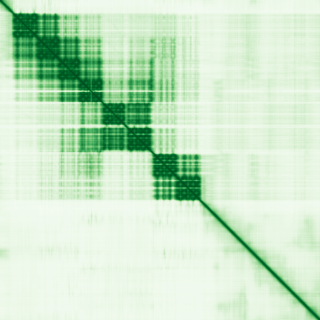
Mean pLDDT
63.7/ 100
Low
1,386 residues
Confidence breakdown
- Very high(≥ 90)24%
- Confident(70–90)27%
- Low(50–70)6%
- Very low(< 50)42%
Open interactive 3D viewer
AlphaFold (Jumper et al., 2021) · CC BY 4.0
roundabout guidance receptor 3
Annotations refreshed 3 months ago.
Diagnostic Grade (Green)
Ataxia and cerebellar anomalies - narrow panel
BIALLELIC, autosomal or pseudoautosomalCerebellar hypoplasia
BIALLELIC, autosomal or pseudoautosomalDDG2P
BIALLELIC, autosomal or pseudoautosomalEhlers Danlos syndrome with a likely monogenic cause
BIALLELIC, autosomal or pseudoautosomalFetal anomalies
BIALLELIC, autosomal or pseudoautosomalHereditary ataxia with onset in adulthood
BIALLELIC, autosomal or pseudoautosomalChildhood onset dystonia, chorea or related movement disorder
Intellectual disability
BIALLELIC, autosomal or pseudoautosomal+3 more panels — install the extension to see the full list inline on any page.
horizontal gaze palsy with progressive scoliosis
hereditary disease
conjugate gaze palsy
gestational diabetes
retinal disorder
Epiretinal membrane
kidney transplant
goiter
adolescent idiopathic scoliosis
tuberous sclerosis
Score is the Open Targets composite evidence score (0-1). Higher = stronger gene-disease association.
Roundabout homolog 3
Receptor involved in axon guidance during development (PubMed:15105459). Acts as a multifunctional regulator of pathfinding that simultaneously mediates NELL2 repulsion, inhibits SLIT repulsion, and facilitates Netrin-1/NTN1 attraction. In spinal cord development plays a role in guiding commissural axons probably by preventing premature sensitivity to Slit proteins thus inhibiting Slit signaling through ROBO1/ROBO2. Binding OF NELL2 to the receptor ROBO3 promotes oligomerization of ROBO3, resulting in the repulsion of commissural axons in the midline. ROBO3 also indirectly boosts axon attraction to NTN1 without interacting with NTN1 itself (By similarity)
ROBO3 · Q96MS0
Mean pLDDT
63.7/ 100
Low
1,386 residues
Confidence breakdown
AlphaFold (Jumper et al., 2021) · CC BY 4.0