
AlphaFold predicted structure
RPA1 · P27694
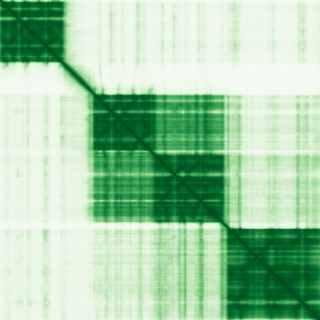
Mean pLDDT
83.8/ 100
Confident
616 residues
Confidence breakdown
- Very high(≥ 90)62%
- Confident(70–90)24%
- Low(50–70)3%
- Very low(< 50)12%
Open interactive 3D viewer
AlphaFold (Jumper et al., 2021) · CC BY 4.0
replication protein A1
Annotations refreshed 2 months ago.
Diagnostic Grade (Green)
Cytopenia - NOT Fanconi anaemia
MONOALLELIC, autosomal or pseudoautosomal, NOT imprintedPulmonary fibrosis familial
MONOALLELIC, autosomal or pseudoautosomal, NOT imprintedpulmonary fibrosis and/or bone marrow failure, telomere-related, 6
non-small cell lung adenocarcinoma
cancer
basal cell carcinoma
prostate carcinoma
melanocytic nevus
lung cancer
melanoma
skin cancer
bronchus cancer
Score is the Open Targets composite evidence score (0-1). Higher = stronger gene-disease association.
Replication protein A 70 kDa DNA-binding subunit
As part of the heterotrimeric replication protein A complex (RPA/RP-A), binds and stabilizes single-stranded DNA intermediates that form during DNA replication or upon DNA stress. It prevents their reannealing and in parallel, recruits and activates different proteins and complexes involved in DNA metabolism (PubMed:17596542, PubMed:27723717, PubMed:27723720). Thereby, it plays an essential role both in DNA replication and the cellular response to DNA damage (PubMed:9430682). In the cellular response to DNA damage, the RPA complex controls DNA repair and DNA damage checkpoint activation. Through recruitment of ATRIP activates the ATR kinase a master regulator of the DNA damage response (PubMed:24332808). It is required for the recruitment of the DNA double-strand break repair factors RAD51 and RAD52 to chromatin in response to DNA damage (PubMed:17765923). Also recruits to sites of DNA damage proteins like XPA and XPG that are involved in nucleotide excision repair and is required for this mechanism of DNA repair (PubMed:7697716). Also plays a role in base excision repair (BER) probably through interaction with UNG (PubMed:9765279). Also recruits SMARCAL1/HARP, which is involved in replication fork restart, to sites of DNA damage. Plays a role in telomere maintenance (PubMed:17959650, PubMed:34767620). As part of the alternative replication protein A complex, aRPA, binds single-stranded DNA and probably plays a role in DNA repair. Compared to the RPA2-containing, canonical RPA complex, may not support chromosomal DNA replication and cell cycle progression through S-phase. The aRPA may not promote efficient priming by DNA polymerase alpha but could support DNA synthesis by polymerase delta in presence of PCNA and replication factor C (RFC), the dual incision/excision reaction of nucleotide excision repair and RAD51-dependent strand exchange (PubMed:19996105). RPA stimulates 5'-3' helicase activity of the BRIP1/FANCJ (PubMed:17596542)
RPA1 · P27694
Mean pLDDT
83.8/ 100
Confident
616 residues
Confidence breakdown
AlphaFold (Jumper et al., 2021) · CC BY 4.0