
AlphaFold predicted structure
RSF1 · Q96T23
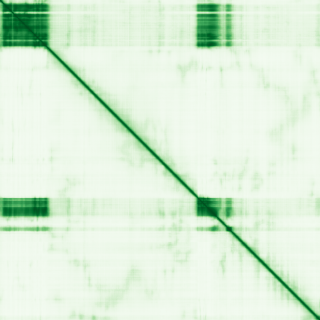
Mean pLDDT
48.0/ 100
Very low
1,441 residues
Confidence breakdown
- Very high(≥ 90)11%
- Confident(70–90)9%
- Low(50–70)7%
- Very low(< 50)73%
Open interactive 3D viewer
AlphaFold (Jumper et al., 2021) · CC BY 4.0
remodeling and spacing factor 1
Annotations refreshed 2 months ago.
Moderate Evidence (Amber)
Intellectual disability
MONOALLELIC, autosomal or pseudoautosomal, NOT imprintedmyopathy
infection
handedness
neurodevelopmental disorder
neoplasm
esophageal squamous cell carcinoma
cancer
non-small cell lung carcinoma
nasopharyngeal carcinoma
cervical carcinoma
Score is the Open Targets composite evidence score (0-1). Higher = stronger gene-disease association.
Remodeling and spacing factor 1
Regulatory subunit of the ATP-dependent RSF-1 and RSF-5 ISWI chromatin-remodeling complexes, which form ordered nucleosome arrays on chromatin and facilitate access to DNA during DNA-templated processes such as DNA replication, transcription, and repair (PubMed:12972596, PubMed:28801535). Binds to core histones together with SMARCA5, and is required for the assembly of regular nucleosome arrays by the RSF-5 ISWI chromatin-remodeling complex (PubMed:12972596). Directly stimulates the ATPase activity of SMARCA1 and SMARCA5 in the RSF-1 and RSF-5 ISWI chromatin-remodeling complexes, respectively (PubMed:28801535). The RSF-1 ISWI chromatin remodeling complex has a lower ATP hydrolysis rate than the RSF-5 ISWI chromatin-remodeling complex (PubMed:28801535). The complexes do not have the ability to slide mononucleosomes to the center of a DNA template (PubMed:28801535). Facilitates transcription of hepatitis B virus (HBV) genes by the pX transcription activator. In case of infection by HBV, together with pX, it represses TNF induced NF-kappa-B transcription activation. Represses transcription when artificially recruited to chromatin by fusion to a heterogeneous DNA binding domain (PubMed:11788598, PubMed:11944984)
RSF1 · Q96T23
Mean pLDDT
48.0/ 100
Very low
1,441 residues
Confidence breakdown
AlphaFold (Jumper et al., 2021) · CC BY 4.0