AlphaFold predicted structure
RTN4IP1 · Q8WWV3
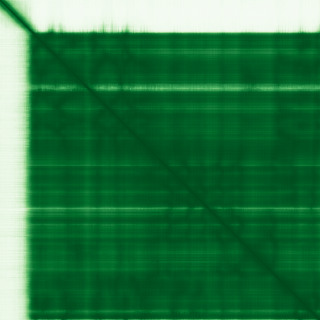
Mean pLDDT
91.8/ 100
Very high
396 residues
Confidence breakdown
- Very high(≥ 90)86%
- Confident(70–90)4%
- Low(50–70)4%
- Very low(< 50)6%
AlphaFold (Jumper et al., 2021) · CC BY 4.0
reticulon 4 interacting protein 1
Annotations refreshed 10 hours ago.
Diagnostic Grade (Green)
DDG2P
BIALLELIC, autosomal or pseudoautosomalEarly onset or syndromic epilepsy
BIALLELIC, autosomal or pseudoautosomalIntellectual disability
BIALLELIC, autosomal or pseudoautosomalLikely inborn error of metabolism
BIALLELIC, autosomal or pseudoautosomalMitochondrial disorders
BIALLELIC, autosomal or pseudoautosomalOptic neuropathy
BIALLELIC, autosomal or pseudoautosomalPossible mitochondrial disorder - nuclear genes
BIALLELIC, autosomal or pseudoautosomalRetinal disorders
+1 more panels — install the extension to see the full list inline on any page.
Autosomal recessive isolated optic atrophy
neurodegenerative disease
hereditary disease
optic atrophy
Retinal dystrophy
dermatophytosis
facial morphology
Abnormality of the gastrointestinal tract
placenta praevia
Global developmental delay
Score is the Open Targets composite evidence score (0-1). Higher = stronger gene-disease association.
NAD(P)H oxidoreductase RTN4IP1, mitochondrial
NAD(P)H oxidoreductase involved in the ubiquinone biosynthetic pathway (PubMed:37884807). Required for the O-methyltransferase activity of COQ3 (PubMed:37884807). Able to catalyze the oxidoreduction of 3-demethylubiquinone into 3-demethylubiquinol in vitro (PubMed:37884807). However, it is unclear if 3-demethylubiquinone constitutes a substrate in vivo (PubMed:37884807). May also play a role in the regulation of retinal ganglion cell (RGC) neurite outgrowth, and hence in the development of the inner retina and optic nerve (By similarity). Appears to be a potent inhibitor of regeneration following spinal cord injury (By similarity)
RTN4IP1 · Q8WWV3

Mean pLDDT
91.8/ 100
Very high
396 residues
Confidence breakdown
AlphaFold (Jumper et al., 2021) · CC BY 4.0