
AlphaFold predicted structure
RYBP · Q8N488
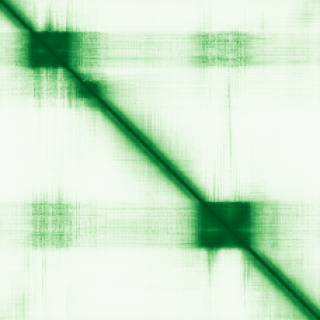
Mean pLDDT
66.6/ 100
Low
228 residues
Confidence breakdown
- Very high(≥ 90)24%
- Confident(70–90)4%
- Low(50–70)59%
- Very low(< 50)13%
Open interactive 3D viewer
AlphaFold (Jumper et al., 2021) · CC BY 4.0
RING1 and YY1 binding protein
Annotations refreshed 2 months ago.
Diagnostic Grade (Green)
DDG2P
MONOALLELIC, autosomal or pseudoautosomal, imprinted status unknownallergic rhinitis
complex neurodevelopmental disorder
Eczematoid dermatitis
asthma
allergic disease
hypothyroidism
intelligence
smoking initiation
diverticular disease
vascular disorder
Score is the Open Targets composite evidence score (0-1). Higher = stronger gene-disease association.
RING1 and YY1-binding protein
Component of a Polycomb group (PcG) multiprotein PRC1-like complex, a complex class required to maintain the transcriptionally repressive state of many genes, including Hox genes, throughout development. PcG PRC1-like complex acts via chromatin remodeling and modification of histones; it mediates monoubiquitination of histone H2A 'Lys-119', rendering chromatin heritably changed in its expressibility (PubMed:25519132). Component of a PRC1-like complex that mediates monoubiquitination of histone H2A 'Lys-119' on the X chromosome and is required for normal silencing of one copy of the X chromosome in XX females. May stimulate ubiquitination of histone H2A 'Lys-119' by recruiting the complex to target sites (By similarity). Inhibits ubiquitination and subsequent degradation of TP53, and thereby plays a role in regulating transcription of TP53 target genes (PubMed:19098711). May also regulate the ubiquitin-mediated proteasomal degradation of other proteins like FANK1 to regulate apoptosis (PubMed:14765135, PubMed:27060496). May be implicated in the regulation of the transcription as a repressor of the transcriptional activity of E4TF1 (PubMed:11953439). May bind to DNA (By similarity). May play a role in the repression of tumor growth and metastasis in breast cancer by down-regulating SRRM3 (PubMed:27748911)
RYBP · Q8N488
Mean pLDDT
66.6/ 100
Low
228 residues
Confidence breakdown
AlphaFold (Jumper et al., 2021) · CC BY 4.0