AlphaFold predicted structure
SAR1B · Q9Y6B6
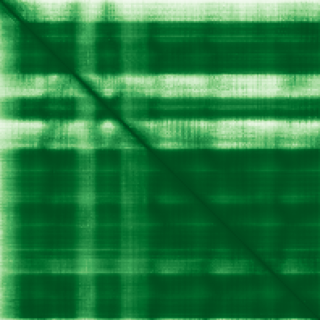
Mean pLDDT
86.8/ 100
Confident
198 residues
Confidence breakdown
- Very high(≥ 90)67%
- Confident(70–90)15%
- Low(50–70)15%
- Very low(< 50)4%
AlphaFold (Jumper et al., 2021) · CC BY 4.0
secretion associated Ras related GTPase 1B
Annotations refreshed 10 hours ago.
Diagnostic Grade (Green)
Intestinal failure or congenital diarrhoea
BIALLELIC, autosomal or pseudoautosomalLikely inborn error of metabolism
BIALLELIC, autosomal or pseudoautosomalUndiagnosed metabolic disorders
BIALLELIC, autosomal or pseudoautosomalHereditary ataxia
BIALLELIC, autosomal or pseudoautosomalHereditary ataxia with onset in adulthood
BIALLELIC, autosomal or pseudoautosomalAdult onset neurodegenerative disorder
BIALLELIC, autosomal or pseudoautosomalAtaxia and cerebellar anomalies - narrow panel
BIALLELIC, autosomal or pseudoautosomalChildhood onset dystonia, chorea or related movement disorder
+1 more panels — install the extension to see the full list inline on any page.
chylomicron retention disease
hereditary disease
neurodegenerative disease
Abnormality of the skeletal system
Alzheimer disease
hereditary chronic pancreatitis
colorectal carcinoma
Hyperlipoproteinemia type 5
hyperlipoproteinemia type V
pancreatic triacylglycerol lipase deficiency
Score is the Open Targets composite evidence score (0-1). Higher = stronger gene-disease association.
Small COPII coat GTPase SAR1B
Small GTPase that cycles between an active GTP-bound and an inactive GDP-bound state and mainly functions in vesicle-mediated endoplasmic reticulum (ER) to Golgi transport. The active GTP-bound form inserts into the endoplasmic reticulum membrane where it recruits the remainder of the coat protein complex II/COPII (PubMed:23433038, PubMed:32358066, PubMed:33186557, PubMed:36369712). The coat protein complex II assembling and polymerizing on endoplasmic reticulum membrane is responsible for both the sorting of cargos and the deformation and budding of membranes into vesicles destined to the Golgi (PubMed:23433038, PubMed:32358066, PubMed:33186557). In contrast to SAR1A, SAR1B specifically interacts with the cargo receptor SURF4 to mediate the transport of lipid-carrying lipoproteins including APOB and APOA1 from the endoplasmic reticulum to the Golgi and thereby, indirectly regulates lipid homeostasis (PubMed:32358066, PubMed:33186557). In addition to its role in vesicle trafficking, can also function as a leucine sensor regulating TORC1 signaling and more indirectly cellular metabolism, growth and survival. In absence of leucine, interacts with the GATOR2 complex via MIOS and inhibits TORC1 signaling. The binding of leucine abrogates the interaction with GATOR2 and the inhibition of the TORC1 signaling. This function is completely independent of the GTPase activity of SAR1B (PubMed:34290409)
SAR1B · Q9Y6B6

Mean pLDDT
86.8/ 100
Confident
198 residues
Confidence breakdown
AlphaFold (Jumper et al., 2021) · CC BY 4.0