
AlphaFold predicted structure
SASH1 · O94885
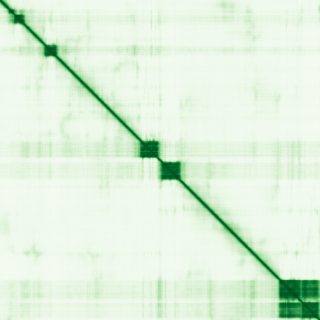
Mean pLDDT
54.2/ 100
Low
1,247 residues
Confidence breakdown
- Very high(≥ 90)17%
- Confident(70–90)11%
- Low(50–70)8%
- Very low(< 50)64%
Open interactive 3D viewer
AlphaFold (Jumper et al., 2021) · CC BY 4.0
SAM and SH3 domain containing 1
Annotations refreshed 2 months ago.
Diagnostic Grade (Green)
Pigmentary skin disorders
MONOALLELIC, autosomal or pseudoautosomal, NOT imprintedIchthyosis and erythrokeratoderma
BIALLELIC, autosomal or pseudoautosomalPalmoplantar keratoderma and erythrokeratodermas
BIALLELIC, autosomal or pseudoautosomalPalmoplantar keratodermas
BIALLELIC, autosomal or pseudoautosomalMultiple monogenic benign skin tumours
BOTH monoallelic and biallelic, autosomal or pseudoautosomalDyschromatosis universalis
pigmentation defects-palmoplantar keratoderma-skin carcinoma syndrome
hypothyroidism
thyroid gland disorder
myxedema
glaucoma
open-angle glaucoma
cardiovascular disorder
familial generalized lentiginosis
Hashimoto thyroiditis
Score is the Open Targets composite evidence score (0-1). Higher = stronger gene-disease association.
SAM and SH3 domain-containing protein 1
Is a positive regulator of NF-kappa-B signaling downstream of TLR4 activation. It acts as a scaffold molecule to assemble a molecular complex that includes TRAF6, MAP3K7, CHUK and IKBKB, thereby facilitating NF-kappa-B signaling activation (PubMed:23776175). Regulates TRAF6 and MAP3K7 ubiquitination (PubMed:23776175). Involved in the regulation of cell mobility (PubMed:23333244, PubMed:23776175, PubMed:25315659). Regulates lipolysaccharide (LPS)-induced endothelial cell migration (PubMed:23776175). Is involved in the regulation of skin pigmentation through the control of melanocyte migration in the epidermis (PubMed:23333244)
SASH1 · O94885
Mean pLDDT
54.2/ 100
Low
1,247 residues
Confidence breakdown
AlphaFold (Jumper et al., 2021) · CC BY 4.0