
AlphaFold predicted structure
SATB1 · Q01826
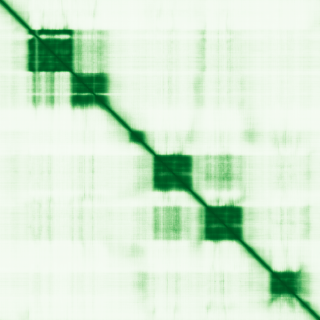
Mean pLDDT
65.3/ 100
Low
763 residues
Confidence breakdown
- Very high(≥ 90)27%
- Confident(70–90)24%
- Low(50–70)7%
- Very low(< 50)42%
Open interactive 3D viewer
AlphaFold (Jumper et al., 2021) · CC BY 4.0
SATB homeobox 1
Annotations refreshed 2 months ago.
Diagnostic Grade (Green)
DDG2P
MONOALLELIC, autosomal or pseudoautosomal, imprinted status unknownEarly onset or syndromic epilepsy
MONOALLELIC, autosomal or pseudoautosomal, imprinted status unknownFetal anomalies
MONOALLELIC, autosomal or pseudoautosomal, NOT imprintedIntellectual disability
MONOALLELIC, autosomal or pseudoautosomal, imprinted status unknowndevelopmental delay with dysmorphic facies and dental anomalies
Kohlschutter-Tonz syndrome-like
hereditary disease
atopic eczema
neurodevelopmental disorder
hypothyroidism
Eczematoid dermatitis
Intellectual disability
complex neurodevelopmental disorder
placental abruption
Score is the Open Targets composite evidence score (0-1). Higher = stronger gene-disease association.
DNA-binding protein SATB1
Crucial silencing factor contributing to the initiation of X inactivation mediated by Xist RNA that occurs during embryogenesis and in lymphoma (By similarity). Binds to DNA at special AT-rich sequences, the consensus SATB1-binding sequence (CSBS), at nuclear matrix- or scaffold-associated regions. Thought to recognize the sugar-phosphate structure of double-stranded DNA. Transcriptional repressor controlling nuclear and viral gene expression in a phosphorylated and acetylated status-dependent manner, by binding to matrix attachment regions (MARs) of DNA and inducing a local chromatin-loop remodeling. Acts as a docking site for several chromatin remodeling enzymes (e.g. PML at the MHC-I locus) and also by recruiting corepressors (HDACs) or coactivators (HATs) directly to promoters and enhancers. Modulates genes that are essential in the maturation of the immune T-cell CD8SP from thymocytes. Required for the switching of fetal globin species, and beta- and gamma-globin genes regulation during erythroid differentiation. Plays a role in chromatin organization and nuclear architecture during apoptosis. Interacts with the unique region (UR) of cytomegalovirus (CMV). Alu-like motifs and SATB1-binding sites provide a unique chromatin context which seems preferentially targeted by the HIV-1 integration machinery. Moreover, HIV-1 Tat may overcome SATB1-mediated repression of IL2 and IL2RA (interleukin) in T-cells by binding to the same domain as HDAC1. Delineates specific epigenetic modifications at target gene loci, directly up-regulating metastasis-associated genes while down-regulating tumor-suppressor genes. Reprograms chromatin organization and the transcription profiles of breast tumors to promote growth and metastasis. Promotes neuronal differentiation of neural stem/progenitor cells in the adult subventricular zone, possibly by positively regulating the expression of NEUROD1 (By similarity)
Curated MONDO disease pages that list SATB1 among their top associated genes.
SATB1 · Q01826
Mean pLDDT
65.3/ 100
Low
763 residues
Confidence breakdown
AlphaFold (Jumper et al., 2021) · CC BY 4.0