Skip to content
GenoLensGenoLens

SCN1B

Chr 19q13.11

sodium voltage-gated channel beta subunit 1

MANE:
ENST00000262631.11

Annotations refreshed 10 hours ago.

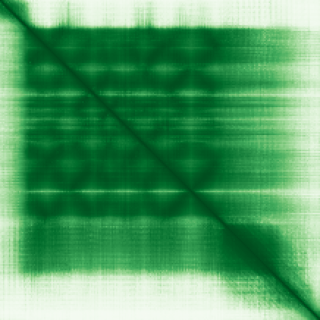
Predicted protein structure

Clinical relevance (Genomics England PanelApp)

Diagnostic Grade (Green)

  • DDG2P

    BOTH monoallelic and biallelic, autosomal or pseudoautosomal
  • Early onset or syndromic epilepsy

    BOTH monoallelic and biallelic, autosomal or pseudoautosomal
  • Dilated Cardiomyopathy and conduction defects

    MONOALLELIC, autosomal or pseudoautosomal, imprinted status unknown
  • Intellectual disability

    BIALLELIC, autosomal or pseudoautosomal
  • Progressive cardiac conduction disease

    MONOALLELIC, autosomal or pseudoautosomal, NOT imprinted
  • Brugada syndrome and cardiac sodium channel disease

    MONOALLELIC, autosomal or pseudoautosomal, imprinted status unknown
  • Fetal anomalies

    MONOALLELIC, autosomal or pseudoautosomal, imprinted status unknown
  • Short QT syndrome

    MONOALLELIC, autosomal or pseudoautosomal, imprinted status unknown

Disease associations (Open Targets)

  • Generalized epilepsy with febrile seizures-plus

    0.75
  • developmental and epileptic encephalopathy, 52

    0.74
  • atrial fibrillation, familial, 13

    0.71
  • Brugada syndrome 5

    0.70
  • Familial progressive cardiac conduction defect

    0.55
  • Brugada syndrome

    0.51
  • Abnormality of the cardiovascular system

    0.50
  • genetic developmental and epileptic encephalopathy

    0.47
  • generalized epilepsy with febrile seizures plus

    0.47
  • Dravet syndrome

    0.47

Score is the Open Targets composite evidence score (0-1). Higher = stronger gene-disease association.

Protein function (UniProt)

Sodium channel regulatory subunit beta-1

Regulatory subunit of multiple voltage-gated sodium (Nav) channels directly mediating the depolarization of excitable membranes (PubMed:40768348). Navs, also called VGSCs (voltage-gated sodium channels) or VDSCs (voltage-dependent sodium channels), operate by switching between closed and open conformations depending on the voltage difference across the membrane. In the open conformation they allow Na(+) ions to selectively pass through the pore, along their electrochemical gradient (PubMed:40768348). The influx of Na+ ions provokes membrane depolarization, initiating the propagation of electrical signals throughout cells and tissues (PubMed:14622265, PubMed:15525788, PubMed:18464934, PubMed:19710327, PubMed:29992740, PubMed:36696443, PubMed:8125980, PubMed:8394762). The accessory beta subunits participate in localization and functional modulation of the Nav channels (PubMed:15525788, PubMed:19710327, PubMed:29992740). Modulates the activity of SCN1A/Nav1.1, SCN2A/Nav1.2, SCN3A/Nav1.3, SCN4A/Nav1.4, SCN5A/Nav1.5, SCN8A/Nav1.6, SCN9A/Nav1.7 and SCN10A/Nav1.8 (PubMed:14622265, PubMed:15525788, PubMed:18464934, PubMed:30765606, PubMed:36696443, PubMed:8125980, PubMed:8394762)

Data sources: HGNC (CC BY 4.0), AlphaFold (CC BY 4.0, Jumper et al. Nature 2021), Genomics England PanelApp (CC BY 4.0), ClinGen, Open Targets (CC0), UniProt.

Not for sole clinical decision-making. Always verify against primary sources.