
AlphaFold predicted structure
SCP2 · P22307
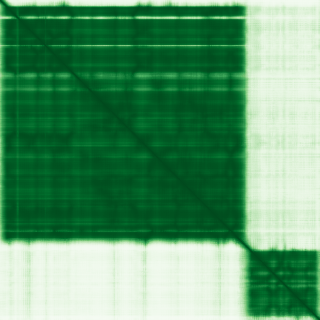
Mean pLDDT
92.3/ 100
Very high
547 residues
Confidence breakdown
- Very high(≥ 90)79%
- Confident(70–90)15%
- Low(50–70)3%
- Very low(< 50)4%
Open interactive 3D viewer
AlphaFold (Jumper et al., 2021) · CC BY 4.0
sterol carrier protein 2
Annotations refreshed 2 months ago.
Diagnostic Grade (Green)
Inherited white matter disorders
BIALLELIC, autosomal or pseudoautosomalLikely inborn error of metabolism
BIALLELIC, autosomal or pseudoautosomalPeroxisomal disorders
BIALLELIC, autosomal or pseudoautosomalUndiagnosed metabolic disorders
BIALLELIC, autosomal or pseudoautosomalWhite matter disorders and cerebral calcification - narrow panel
BIALLELIC, autosomal or pseudoautosomalAdult onset dystonia, chorea or related movement disorder
Adult onset neurodegenerative disorder
UnknownChildhood onset dystonia, chorea or related movement disorder
Unknown+4 more panels — install the extension to see the full list inline on any page.
Leukoencephalopathy - dystonia - motor neuropathy
sterol carrier protein 2 deficiency
stroke disorder
alcohol drinking
leukodystrophy
Sensorineural hearing impairment
spermatogenic failure
Hyperlipoproteinemia type 1
glycogen storage disease VI
progressive familial intrahepatic cholestasis
Score is the Open Targets composite evidence score (0-1). Higher = stronger gene-disease association.
Synaptonemal complex protein 2
Major component of the axial/lateral elements of synaptonemal complexes (SCS) during meiotic prophase. Plays a role in the assembly of synaptonemal complexes. Required for normal meiotic chromosome synapsis during oocyte and spermatocyte development and for normal male and female fertility. Required for insertion of SYCP3 into synaptonemal complexes. May be involved in the organization of chromatin by temporarily binding to DNA scaffold attachment regions. Requires SYCP3, but not SYCP1, in order to be incorporated into the axial/lateral elements
SCP2 · P22307
Mean pLDDT
92.3/ 100
Very high
547 residues
Confidence breakdown
AlphaFold (Jumper et al., 2021) · CC BY 4.0