
AlphaFold predicted structure
SECISBP2 · Q96T21
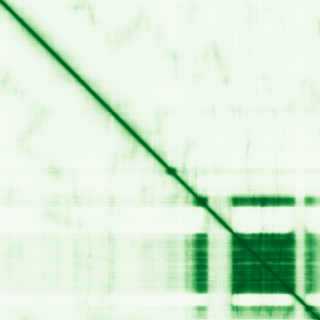
Mean pLDDT
55.1/ 100
Low
854 residues
Confidence breakdown
- Very high(≥ 90)18%
- Confident(70–90)10%
- Low(50–70)7%
- Very low(< 50)64%
Open interactive 3D viewer
AlphaFold (Jumper et al., 2021) · CC BY 4.0
SECIS binding protein 2
Annotations refreshed 2 months ago.
Diagnostic Grade (Green)
Congenital hypothyroidism
BIALLELIC, autosomal or pseudoautosomalDDG2P
BIALLELIC, autosomal or pseudoautosomalHyperthyroidism
BIALLELIC, autosomal or pseudoautosomalThoracic aortic aneurysm or dissection (GMS)
BIALLELIC, autosomal or pseudoautosomalFetal anomalies
BIALLELIC, autosomal or pseudoautosomalMitochondrial disorders
thyroid hormone metabolism, abnormal 1
thyroid hormone metabolism, abnormal
thoracic aortic aneurysm
poisoning
hereditary disease
nephrotic syndrome
obesity disorder
Obesity
obesity due to melanocortin 4 receptor deficiency
Insulin resistance
Score is the Open Targets composite evidence score (0-1). Higher = stronger gene-disease association.
Selenocysteine insertion sequence-binding protein 2
mRNA-binding protein that binds to the SECIS (selenocysteine insertion sequence) element present in the 3'-UTR of mRNAs encoding selenoproteins and facilitates the incorporation of the rare amino acid selenocysteine (PubMed:35709277). Insertion of selenocysteine at UGA codons is mediated by SECISBP2 and EEFSEC: SECISBP2 (1) specifically binds the SECIS sequence once the 80S ribosome encounters an in-frame UGA codon and (2) contacts the RPS27A/eS31 of the 40S ribosome before ribosome stalling (PubMed:35709277). (3) GTP-bound EEFSEC then delivers selenocysteinyl-tRNA(Sec) to the 80S ribosome and adopts a preaccommodated state conformation (PubMed:35709277). (4) After GTP hydrolysis, EEFSEC dissociates from the assembly, selenocysteinyl-tRNA(Sec) accommodates, and peptide bond synthesis and selenoprotein elongation occur (PubMed:35709277)
SECISBP2 · Q96T21
Mean pLDDT
55.1/ 100
Low
854 residues
Confidence breakdown
AlphaFold (Jumper et al., 2021) · CC BY 4.0