
AlphaFold predicted structure
SIN3A · Q96ST3
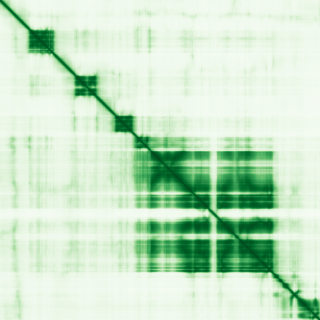
Mean pLDDT
68.5/ 100
Low
1,273 residues
Confidence breakdown
- Very high(≥ 90)25%
- Confident(70–90)34%
- Low(50–70)12%
- Very low(< 50)29%
Open interactive 3D viewer
AlphaFold (Jumper et al., 2021) · CC BY 4.0
SIN3 transcription regulator family member A
Annotations refreshed 2 months ago.
Diagnostic Grade (Green)
DDG2P
MONOALLELIC, autosomal or pseudoautosomal, imprinted status unknownFetal anomalies
MONOALLELIC, autosomal or pseudoautosomal, NOT imprintedIntellectual disability
MONOALLELIC, autosomal or pseudoautosomal, imprinted status unknownClefting
MONOALLELIC, autosomal or pseudoautosomal, NOT imprinted15q24 microdeletion syndrome
SIN3A-related intellectual disability syndrome
syndromic intellectual disability
hereditary disease
chromosome 15q24 deletion syndrome
neurodegenerative disease
Burkitt lymphoma
autism
Rett syndrome
non-Hodgkin lymphoma
Score is the Open Targets composite evidence score (0-1). Higher = stronger gene-disease association.
Paired amphipathic helix protein Sin3a
Acts as a transcriptional repressor. Corepressor for REST. Interacts with MXI1 to repress MYC responsive genes and antagonize MYC oncogenic activities. Also interacts with MXD1-MAX heterodimers to repress transcription by tethering SIN3A to DNA. Acts cooperatively with OGT to repress transcription in parallel with histone deacetylation. Involved in the control of the circadian rhythms. Required for the transcriptional repression of circadian target genes, such as PER1, mediated by the large PER complex through histone deacetylation. Cooperates with FOXK1 to regulate cell cycle progression probably by repressing cell cycle inhibitor genes expression (By similarity). Required for cortical neuron differentiation and callosal axon elongation (By similarity)
SIN3A · Q96ST3
Mean pLDDT
68.5/ 100
Low
1,273 residues
Confidence breakdown
AlphaFold (Jumper et al., 2021) · CC BY 4.0