
AlphaFold predicted structure
SIX1 · Q15475
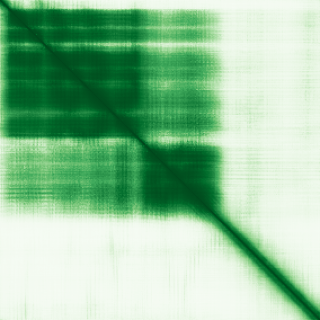
Mean pLDDT
75.6/ 100
Confident
284 residues
Confidence breakdown
- Very high(≥ 90)52%
- Confident(70–90)11%
- Low(50–70)8%
- Very low(< 50)28%
Open interactive 3D viewer
AlphaFold (Jumper et al., 2021) · CC BY 4.0
SIX homeobox 1
Annotations refreshed 2 months ago.
Diagnostic Grade (Green)
Clefting
MONOALLELIC, autosomal or pseudoautosomal, imprinted status unknownDDG2P
MONOALLELIC, autosomal or pseudoautosomal, imprinted status unknownDeafness and congenital structural abnormalities
MONOALLELIC, autosomal or pseudoautosomal, NOT imprintedMonogenic hearing loss
MONOALLELIC, autosomal or pseudoautosomal, imprinted status unknownRare syndromic craniosynostosis or isolated multisuture synostosis
MONOALLELIC, autosomal or pseudoautosomal, NOT imprintedCAKUT
MONOALLELIC, autosomal or pseudoautosomal, imprinted status unknownFetal anomalies
MONOALLELIC, autosomal or pseudoautosomal, imprinted status unknownIntellectual disability
MONOALLELIC, autosomal or pseudoautosomal, imprinted status unknown+2 more panels — install the extension to see the full list inline on any page.
Branchio-otic syndrome
autosomal dominant nonsyndromic hearing loss
branchiootic syndrome
branchio-oto-renal syndrome
BOR syndrome
prostate carcinoma
isolated craniosynostosis
hereditary disease
hearing loss disorder
deafness
Score is the Open Targets composite evidence score (0-1). Higher = stronger gene-disease association.
Homeobox protein SIX1
Transcription factor that is involved in the regulation of cell proliferation, apoptosis and embryonic development (By similarity). Plays an important role in the development of several organs, including kidney, muscle and inner ear (By similarity). Depending on context, functions as a transcriptional repressor or activator (By similarity). Lacks an activation domain, and requires interaction with EYA family members for transcription activation (PubMed:15141091). Mediates nuclear translocation of EYA1 and EYA2 (PubMed:19497856). Binds the 5'-TCA[AG][AG]TTNC-3' motif present in the MEF3 element in the MYOG promoter and CIDEA enhancer (PubMed:15141091, PubMed:19497856, PubMed:23435380, PubMed:27923061). Regulates the expression of numerous genes, including MYC, CCND1 and EZR (By similarity). Acts as an activator of the IGFBP5 promoter, probably coactivated by EYA2 (By similarity). Repression of precursor cell proliferation in myoblasts is switched to activation through recruitment of EYA3 to the SIX1-DACH1 complex (By similarity). During myogenesis, seems to act together with EYA2 and DACH2 (By similarity). Regulates the expression of CCNA1 (PubMed:15123840). Promotes brown adipocyte differentiation (By similarity)
Curated MONDO disease pages that list SIX1 among their top associated genes.
SIX1 · Q15475
Mean pLDDT
75.6/ 100
Confident
284 residues
Confidence breakdown
AlphaFold (Jumper et al., 2021) · CC BY 4.0