Skip to content
GenoLensGenoLens

SIX2

Chr 2p21

SIX homeobox 2

MANE:
ENST00000303077.7

Annotations refreshed 9 hours ago.

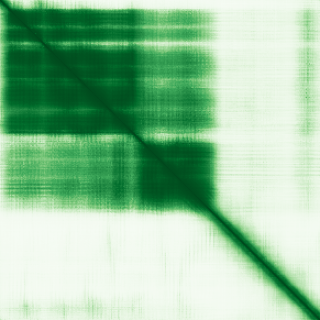
Predicted protein structure

Clinical relevance (Genomics England PanelApp)

Diagnostic Grade (Green)

  • Fetal anomalies

    MONOALLELIC, autosomal or pseudoautosomal, NOT imprinted
  • Paediatric disorders - additional genes

    MONOALLELIC, autosomal or pseudoautosomal, NOT imprinted
  • Rare syndromic craniosynostosis or isolated multisuture synostosis

    MONOALLELIC, autosomal or pseudoautosomal, NOT imprinted

Disease associations (Open Targets)

  • alcohol drinking

    0.31
  • benign soft tissue neoplasm

    0.28
  • respiratory tract infectious disorder

    0.24
  • facial morphology

    0.23
  • Abnormal nasolacrimal system morphology

    0.22
  • hepatitis B virus infection

    0.21
  • fungal lung infectious disease

    0.21
  • preeclampsia

    0.21
  • pneumonia

    0.21
  • hepatocellular carcinoma

    0.21

Score is the Open Targets composite evidence score (0-1). Higher = stronger gene-disease association.

Protein function (UniProt)

Homeobox protein SIX2

Transcription factor that plays an important role in the development of several organs, including kidney, skull and stomach. During kidney development, maintains cap mesenchyme multipotent nephron progenitor cells in an undifferentiated state by opposing the inductive signals emanating from the ureteric bud and cooperates with WNT9B to promote renewing progenitor cells proliferation. Acts through its interaction with TCF7L2 and OSR1 in a canonical Wnt signaling independent manner preventing transcription of differentiation genes in cap mesenchyme such as WNT4. Also acts independently of OSR1 to activate expression of many cap mesenchyme genes, including itself, GDNF and OSR1. During craniofacial development plays a role in growth and elongation of the cranial base through regulation of chondrocyte differentiation. During stomach organogenesis, controls pyloric sphincter formation and mucosal growth through regulation of a gene network including NKX2-5, BMPR1B, BMP4, SOX9 and GREM1. During branchial arch development, acts to mediate HOXA2 control over the insulin-like growth factor pathway. May also be involved in limb tendon and ligament development (By similarity). Plays a role in cell proliferation and migration

Data sources: HGNC (CC BY 4.0), AlphaFold (CC BY 4.0, Jumper et al. Nature 2021), Genomics England PanelApp (CC BY 4.0), ClinGen, Open Targets (CC0), UniProt.

Not for sole clinical decision-making. Always verify against primary sources.