
AlphaFold predicted structure
SIX3 · O95343
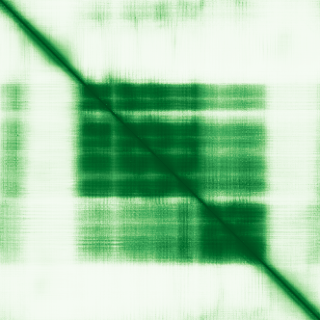
Mean pLDDT
67.9/ 100
Low
332 residues
Confidence breakdown
- Very high(≥ 90)34%
- Confident(70–90)18%
- Low(50–70)10%
- Very low(< 50)39%
Open interactive 3D viewer
AlphaFold (Jumper et al., 2021) · CC BY 4.0
SIX homeobox 3
Annotations refreshed 2 months ago.
Diagnostic Grade (Green)
Clefting
MONOALLELIC, autosomal or pseudoautosomal, imprinted status unknownDDG2P
MONOALLELIC, autosomal or pseudoautosomal, imprinted status unknownFetal anomalies
MONOALLELIC, autosomal or pseudoautosomal, imprinted status unknownHoloprosencephaly
MONOALLELIC, autosomal or pseudoautosomal, imprinted status unknownIntellectual disability
MONOALLELIC, autosomal or pseudoautosomal, NOT imprintedEarly onset or syndromic epilepsy
MONOALLELIC, autosomal or pseudoautosomal, imprinted status unknownStructural eye disease
MONOALLELIC, autosomal or pseudoautosomal, NOT imprintedBilateral congenital or childhood onset cataracts
+2 more panels — install the extension to see the full list inline on any page.
holoprosencephaly
schizencephaly
type 2 diabetes mellitus
risk-taking behaviour
smoking initiation
substance-related disorder
Irritability
refractive error
microform holoprosencephaly
alobar holoprosencephaly
Score is the Open Targets composite evidence score (0-1). Higher = stronger gene-disease association.
Homeobox protein SIX3
Transcriptional regulator which can act as both a transcriptional repressor and activator by binding a ATTA homeodomain core recognition sequence on these target genes. During forebrain development represses WNT1 expression allowing zona limitans intrathalamica formation and thereby ensuring proper anterio-posterior patterning of the diencephalon and formation of the rostral diencephalon. Acts as a direct upstream activator of SHH expression in the rostral diencephalon ventral midline and that in turn SHH maintains its expression. In addition, Six3 activity is required for the formation of the telencephalon. During postnatal stages of brain development is necessary for ependymal cell maturation by promoting the maturation of radial glia into ependymal cells through regulation of neuroblast proliferation and migration. Acts on the proliferation and differentiation of neural progenitor cells through activating transcription of CCND1 and CCND2. During early lens formation plays a role in lens induction and specification by activating directly PAX6 in the presumptive lens ectoderm. In turn PAX6 activates SIX3 resulting in activation of PDGFRA and CCND1 promoting cell proliferation. Also is required for the neuroretina development by directly suppressing WNT8B expression in the anterior neural plate territory. Its action during retina development and lens morphogenesis is TLE5 and TLE4-dependent manner. Furthermore, during eye development regulates several genes expression. Before and during early lens development represses the CRYGF promoter by binding a SIX repressor element. Directly activates RHO transcription, or cooperates with CRX or NRL. Six3 also functions in the formation of the proximodistal axis of the optic cup, and promotes the formation of optic vesicles-like structures. During pituitary development, acts in parallel or alternatively with HESX1 to control cell proliferation through Wnt/beta-catenin pathway (By similarity). Plays a role in eye development by suppressing WNT1 expression and in dorsal-ventral patterning by repressing BMP signaling pathway
SIX3 · O95343
Mean pLDDT
67.9/ 100
Low
332 residues
Confidence breakdown
AlphaFold (Jumper et al., 2021) · CC BY 4.0