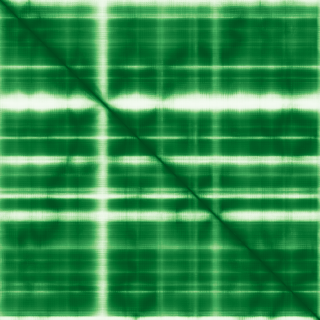
AlphaFold predicted structure
SLC13A5 · Q86YT5

Mean pLDDT
86.1/ 100
Confident
568 residues
Confidence breakdown
- Very high(≥ 90)59%
- Confident(70–90)28%
- Low(50–70)9%
- Very low(< 50)4%
AlphaFold (Jumper et al., 2021) · CC BY 4.0
solute carrier family 13 member 5
Annotations refreshed 9 hours ago.
Diagnostic Grade (Green)
Amelogenesis imperfecta
BIALLELIC, autosomal or pseudoautosomalDDG2P
BIALLELIC, autosomal or pseudoautosomalEarly onset or syndromic epilepsy
BIALLELIC, autosomal or pseudoautosomalFetal anomalies
BIALLELIC, autosomal or pseudoautosomalIntellectual disability
BIALLELIC, autosomal or pseudoautosomalInherited white matter disorders
BIALLELIC, autosomal or pseudoautosomalMitochondrial disorders
BIALLELIC, autosomal or pseudoautosomalWhite matter disorders and cerebral calcification - narrow panel
BIALLELIC, autosomal or pseudoautosomalundetermined early-onset epileptic encephalopathy
hereditary disease
genetic developmental and epileptic encephalopathy
amelocerebrohypohidrotic syndrome
Amelo-cerebro-hypohidrotic syndrome
Hypoplastic amelogenesis imperfecta
Epileptic encephalopathy
alcohol drinking
insomnia
Intellectual disability
Score is the Open Targets composite evidence score (0-1). Higher = stronger gene-disease association.
Na(+)/citrate cotransporter
High-affinity sodium/citrate cotransporter that mediates the entry of citrate into cells, which is a critical participant of biochemical pathways (PubMed:12445824, PubMed:12826022, PubMed:26324167, PubMed:26384929, PubMed:30054523, PubMed:33597751, PubMed:39622972). May function in various metabolic processes in which citrate has a critical role such as energy production (Krebs cycle), fatty acid synthesis, cholesterol synthesis, glycolysis, and gluconeogenesis (PubMed:12826022). Transports citrate into the cell in a Na(+)-dependent manner, recognizing the trivalent form of citrate (physiological pH) rather than the divalent form (PubMed:12445824, PubMed:12826022, PubMed:26324167, PubMed:26384929, PubMed:30054523, PubMed:33597751, PubMed:39622972). Can recognize succinate as a substrate, but its affinity for succinate is several fold lower than for citrate (PubMed:26324167). The stoichiometry is probably 4 Na(+) for each carboxylate, irrespective of whether the translocated substrate is divalent or trivalent, rendering the process electrogenic (PubMed:12445824, PubMed:12826022, PubMed:39622972). Involved in the regulation of citrate levels in the brain (By similarity)
Curated MONDO disease pages that list SLC13A5 among their top associated genes.
SLC13A5 · Q86YT5

Mean pLDDT
86.1/ 100
Confident
568 residues
Confidence breakdown
AlphaFold (Jumper et al., 2021) · CC BY 4.0