Skip to content
GenoLensGenoLens

SLC1A3

Chr 5p13.2

solute carrier family 1 member 3

Aliases:
EAAT1, GLAST, EA6, GLAST1, GLAST-1
MANE:
ENST00000265113.9

Annotations refreshed 1 month ago.

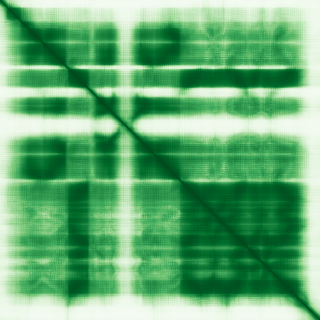
Predicted protein structure

Clinical relevance (Genomics England PanelApp)

Diagnostic Grade (Green)

  • Ataxia and cerebellar anomalies - narrow panel

    MONOALLELIC, autosomal or pseudoautosomal, imprinted status unknown
  • Brain channelopathy

    MONOALLELIC, autosomal or pseudoautosomal, NOT imprinted
  • Hereditary ataxia

    MONOALLELIC, autosomal or pseudoautosomal, imprinted status unknown
  • Hereditary ataxia with onset in adulthood

    MONOALLELIC, autosomal or pseudoautosomal, imprinted status unknown
  • Paroxysmal central nervous system disorders

    MONOALLELIC, autosomal or pseudoautosomal, imprinted status unknown
  • Skeletal Muscle Channelopathies

    MONOALLELIC, autosomal or pseudoautosomal, imprinted status unknown
  • Childhood onset dystonia, chorea or related movement disorder

    MONOALLELIC, autosomal or pseudoautosomal, NOT imprinted
  • Adult onset dystonia, chorea or related movement disorder

    MONOALLELIC, autosomal or pseudoautosomal, NOT imprinted

+5 more panels — install the extension to see the full list inline on any page.

Disease associations (Open Targets)

  • episodic ataxia type 6

    0.77
  • neurodegenerative disease

    0.49
  • osteoporosis

    0.45
  • Familial paroxysmal ataxia

    0.39
  • Isaacs syndrome

    0.37
  • autoimmune disorder of central nervous system

    0.37
  • bone disorder

    0.31
  • placenta praevia

    0.30
  • cutaneous melanoma

    0.29
  • biliary tract disorder

    0.27

Score is the Open Targets composite evidence score (0-1). Higher = stronger gene-disease association.

Protein function (UniProt)

Excitatory amino acid transporter 1

Sodium-dependent, high-affinity amino acid transporter that mediates the uptake of L-glutamate and also L-aspartate and D-aspartate (PubMed:20477940, PubMed:26690923, PubMed:28032905, PubMed:28424515, PubMed:7521911, PubMed:8123008). Functions as a symporter that transports one amino acid molecule together with two or three Na(+) ions and one proton, in parallel with the counter-transport of one K(+) ion (PubMed:20477940). Mediates Cl(-) flux that is not coupled to amino acid transport; this avoids the accumulation of negative charges due to aspartate and Na(+) symport (PubMed:20477940). Plays a redundant role in the rapid removal of released glutamate from the synaptic cleft, which is essential for terminating the postsynaptic action of glutamate (By similarity)

Data sources: HGNC (CC BY 4.0), AlphaFold (CC BY 4.0, Jumper et al. Nature 2021), Genomics England PanelApp (CC BY 4.0), ClinGen, Open Targets (CC0), UniProt.

Not for sole clinical decision-making. Always verify against primary sources.