Skip to content
GenoLensGenoLens

SLC26A3

Chr 7q22.3-q31.1

solute carrier family 26 member 3

MANE:
ENST00000340010.10

Annotations refreshed 9 hours ago.

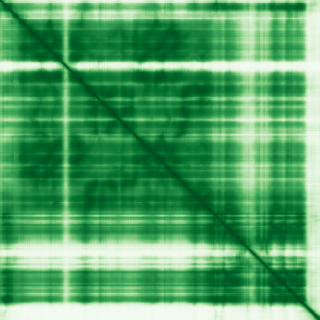
Predicted protein structure

Clinical relevance (Genomics England PanelApp)

Diagnostic Grade (Green)

  • Fetal anomalies

    BIALLELIC, autosomal or pseudoautosomal
  • Intestinal failure or congenital diarrhoea

    BIALLELIC, autosomal or pseudoautosomal
  • GI tract tumours

Disease associations (Open Targets)

  • congenital secretory chloride diarrhea 1

    0.82
  • Congenital chloride diarrhea

    0.78
  • hydrops fetalis

    0.48
  • Polyhydramnios

    0.46
  • ulcerative colitis

    0.44
  • intestinal obstruction

    0.43
  • cholelithiasis

    0.42
  • inflammatory bowel disease

    0.39
  • Secretory diarrhea

    0.37
  • Cholecystitis

    0.34

Score is the Open Targets composite evidence score (0-1). Higher = stronger gene-disease association.

Protein function (UniProt)

Chloride anion exchanger

Mediates chloride-bicarbonate exchange with a chloride bicarbonate stoichiometry of 2:1 in the intestinal epithelia (PubMed:16606687, PubMed:19321737, PubMed:22159084, PubMed:22627094). Plays a role in the chloride and bicarbonate homeostasis during sperm epididymal maturation and capacitation (By similarity)

Curated MONDO disease pages that list SLC26A3 among their top associated genes.

Data sources: HGNC (CC BY 4.0), AlphaFold (CC BY 4.0, Jumper et al. Nature 2021), Genomics England PanelApp (CC BY 4.0), ClinGen, Open Targets (CC0), UniProt.

Not for sole clinical decision-making. Always verify against primary sources.